Although
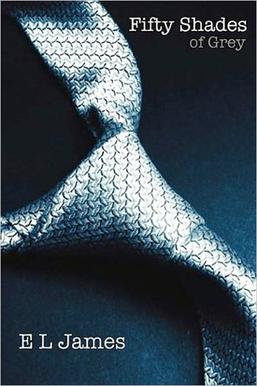
I’ve blogged here before about 50 Shadesof Grey, and I recently blogged
here about the persistence of the Cinderella myth, I’m going to bring it all up
again. The much-anticipated 50 Shades film
recently came out, just in time for that most horrifying of holidays, Valentine’s
Day, and many of us literary folk have been scratching our heads as to why, exactly, a poorly-written,
poorly-plotted, sex-negative “mommy-porn” has made so much money and appealed
to so many women.
 |
| Mad, bad & sexy! Lord Byron |
To me,
the reasoning is fairly simple, though I will caveat my argument with the fact
that I have read the books, but I have not yet seen the movie. Going by the
books, however, it seems pretty obvious that 50 Shades combines two (possibly three) very powerful cultural
myths: that of the rags-to-riches story (cue Cinderella) and the rake-reformed
(cue the Byronic hero).
Although
50 Shades began as a Twilight fan fic, it owes almost as much
to Pretty Woman as it does to its
vampire progenitor. Pretty Woman is
obviously a reworking of the Cinderella story, but if we look closely, we can
see that it is also a story about bringing a sardonic, isolated, and brooding billionaire back to life—just like
50 Shades of Grey.
The
Byronic hero or antihero (your choice) has his own gravitational pull. He is
mysterious, alluring, charming, brooding, prone to outbursts, and intellectually
superior to those who surround him. He is doing penance for an unknown past
sin, suggesting emotional vulnerability obscured by a carapace of irony and
self-loathing. He is cocky, self-assured, highly intelligent and, of course,
wildly attractive, handsome, sexy, etc.
It’s
hard to find a television drama these days without a version of our beloved
Byronic hero—named after Romantic poet Lord Byron who was described by a
contemporary as “mad, bad, and dangerous to know.” The archetype of the Byronic
hero draws on both Byron’s personality as well as on his works—such as the
character Manfred in the closet drama of the same name. Other Romantic and
Gothic texts took up the rough outlines of the Byronic hero and helped build up
his allure.
Victor
Frankenstein, Heathcliff, Mr. Rochester, Sherlock Holmes and Eugene Onegin are
some nineteenth-century examples that contributed to the growth of interest in
this type of hero. Today, the obsession continues with various Sherlock Holmes
movies and shows (Elementary and Sherlock), Dr. House, the entire Batman franchise, Edward Cullen and now
Christian Grey.
 |
| Michael Fassbender as Mr. Rochester. He's so tormented! Don't you just want to make him a sandwich? |
The
idea that a woman could “fix” the bad boy Byronic hero and open his heart to
love has been around a long time as well. In some cases, our heroines succeed
(Jane marries Mr. Rochester, though only after becoming financially
independent); in others, they don’t even bother trying (Cathy is her own kind
of Byronic heroine in Wuthering Heights,
one could argue).
One of
the most alluring conceits in the 50
Shades of Grey series is, no doubt, that Anastasia Steele succeeds in
reforming her rake and, even more potently, that it is her innocence, purity,
and tenderness that tame the beast (cue the Beauty and the Beast myth). While
outwardly the novels appear to be about Christian’s dominance over Ana (and
many feminists have castigated the work for supposedly glorifying stalker-like,
abusive behavior in romantic relationships), at the heart of the appeal of 50 Shades of Grey is the powerful notion
that this young woman is the only person powerful enough and special enough to
reform Christian and his sexual deviance.
 |
| One of the earliest press release photos underscores the difference between Ana and Christian: college student and sexy billionaire. |
Ana is
so morally and emotionally pure, that not only is she a virgin before she meets
Christian, but she refuses many of his monetary gifts. She doesn’t want him for
his money—though ultimately his money is the other crucial part of the powerful
fantasy and appeal of E.L. James’s novels. Christian is so wealthy, that Ana’s
money problems are solved forever once they get together. His wealth means most
people are at his command—but not Ana. Though she agrees (sporadically) to be
his submissive in the bedroom, she is constantly challenging him. Although she
is physically weaker, younger, and financially insolvent in comparison with her
lover, it is actually Ana (the woman) in the relationship who wields the real
(emotional) power—and who “wins” at the end of the novel. Winning here means helped
Christian leave behind the world of BDSM (mostly, anyway) in exchange for
domestic bliss (and “vanilla sex”).
That is
a powerful fantasy. And that, to me, is why these books are so addictive. It’s
not just the sex. And it’s not because all these women are yearning to be in
abusive relationships. It’s because these novels draw on culturally-embedded
myths: Beauty and the Beast, Cinderella, the Byronic Hero. Further, they take
these myths and rework them into a female fantasy in which empowerment is only
necessary insofar as you are able to change your sexy, brooding Byronic hero
into a sexy, no-longer-brooding billionaire husband and baby-daddy.
Thematically, thus, 50 Shades of Grey is
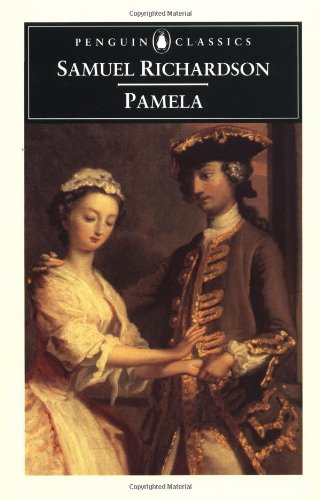
not so different than Pamela or Jane Eyre.
No
doubt poor Charlotte Brontë is spinning in her grave!
Now, don't misunderstand me...there is plenty that is problematic, to say the least, about these novels and the spin-offs they have engendered. But it seems worthwhile to look at them in the context of archetypes and cultural myths, for they reveal the persistence of certain ideas in our culture. Further, literature has always been a place in which to explore (and create) fantasies in a safe place. Eighteenth-century fictions presented their readers with heroines in sticky situations, often for the purposes of entertainment--not always for moral instruction.
We can read Eliza Haywood's Fantomina, for example, as a text about a deeply misguided young woman brought to the brink of obsession by a man. Or, we can read her as a conniving, powerful young woman in control of her sexuality. Both Fantomina and 50 Shades illustrate certain persistent inequalities in our society without making a definitive judgment about these inequalities.
This is not to suggest that 50 Shades is important in any "literary" way. It's poorly written with ridiculous dialogue and flat characterizations. It's erotica, and by definition erotica is repetitive--there's only so many ways to go about that particular business. But the very popularity of 50 Shades and its protagonists is what makes them so interesting to consider.