Showing posts with label Pamela. Show all posts

Wednesday, January 14, 2015

The Cinderella Complex: On the lasting effects of Pamela

It is a truth universally acknowledged that the second half of Pamela is not nearly as interesting as the first half. The first half of the novel details Pamela and Mr. B’s strange S&M-type relationship which includes multiple attempted rapes, kidnapping, beatings and verbal abuse of Pamela at the hands of her future husband.

The second half of the novel draws out their engagement, secret wedding, meeting the neighbors and finally reconciliation with Mr. B’s sister, Lady Davers. Lady Davers takes a lot of convincing, as she herself is of the conviction that by marrying Pamela, his mother's waiting-maid, Mr. B has debased himself. As they argue, Lady Davers tries to show her brother the error of his ways by suggesting that his marriage is the same as if she had married her groom.

“[Lady Davers:] Where can the Difference be between a Beggar’s Son marry’d by a Lady; or a Beggar’s Daughter made a Gentleman’s Wife?

Then I’ll tell you, reply’d he [Mr. B]; The Difference is, a Man ennobles the Woman he takes, be she who she will; and adopts her into his own Rank, but it what it will: But a Woman, tho’ ever so nobly born, debases herself by a mean Marriage, and descends from her own Rank, to his she stoops to.”

Mr. B’s answer perfectly sums up a sentiment shared by many people in the Western world from the eighteenth century onward. Even now, one might argue, there are those who would agree with his statement.

Such a statement might have made sense in the eighteenth century, as legally, a woman became her husband’s property upon marriage back then. In England, she automatically lost her maiden name upon marriage, as well. For many decades, anything a woman earned was considered her husband’s or her father’s property, and her wages could be garnished by the man of the house and spent by him as he wished.

Thus, an eighteenth-century author like Samuel Richardson truly would believe that it was the man’s rank that determined his wife’s—never vice versa.

It’s much harder, I think, to understand why so many people still believe in this idea today. Women have joined the work force, we have entered into some of the highest spheres in the workplace, and we have made many strides towards equality. 

At the same time men are still the primary breadwinner in most families around the world—and even in the Western world. Many men still have a hard time squaring the idea that they might stay at home while their wives go to work—even as the numbers of “stay at home dads” increase. Similarly, the lack of childcare options in the US, coupled with the shortest amount of paid maternity leave in the Western world mean that it still makes more “financial sense” for women to stay home with the children while their husbands go to work. (Of course, the lack of any kind of paternity leave for fathers only exacerbates these trends.)
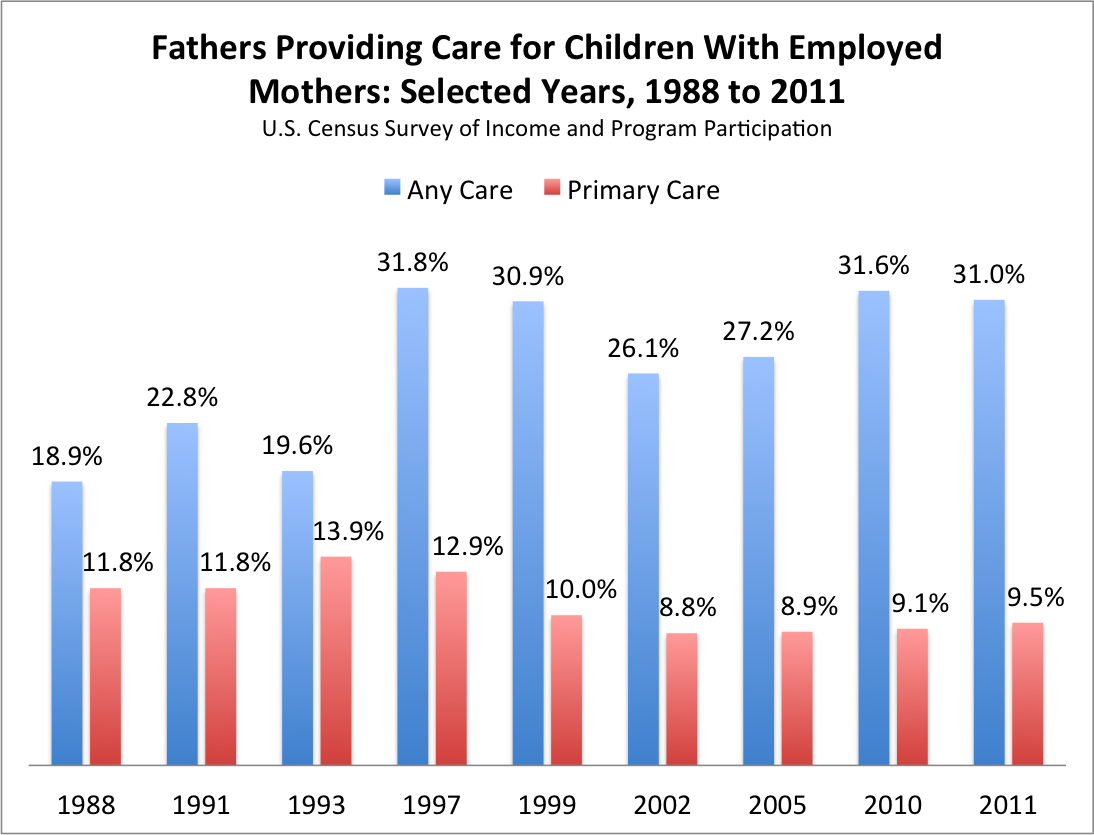
Even in 2011, only 9.5% of fathers are the primary care-givers for children.
That's nowhere near 50%...
On the other hand, to go back to the eighteenth century, there were many men and women who deplored the subordinate condition of women and who spoke out against it. Mary Astell, Anne Finch, the women of the Bluestocking group, Jeremy Bentham, and Mary Wollstonecraft are just some of the many writers, both male and female, who railed against the oppression and unequal treatment of women.

Were there any upper-class women who married far below them, in the manner of Mr. B and Pamela? Were there any writers who challenged Richardson’s implicit sense of righteousness that only a man could “ennoble” his wife—never vice versa? If my readers know of any, I’d be excited to hear about it.

Class is a slippery topic, more ephemeral, in some ways, than either gender or race. How do we identify class? Titles, money, family name, income vs. inheritance, position, tastes, and background all play a part. It is possible to be of a high class but to be poor (consider the impoverished nobility of the eighteenth and nineteenth centuries). It is possible to have wealth but retain lower-class tastes that taint one in the eyes of the upper classes (such as those who are deemed the nouveau-riche).

Pamela is considered so revolutionary precisely because it illustrates the changing categories of class in the eighteenth century. Pamela is allowed to be ennobled because she is so virtuous—but also, because she is so beautiful. In the novel, beauty and virtue are joined together, just as Mrs. Jewkes must be ugly because she has such low, evil tastes. Later female authors, like Frances Burney and Jane Austen, explicitly challenge the notion that beauty and virtue are always joined.

We can't get enough of Jane & Rochester!
Of course, it’s impossible to discount the far-reaching effects Pamela has on English literature. It’s hard to read Pamela without also immediately thinking about Jane Eyre, for example, and how Charlotte Bronte changes the ending so that Jane and Rochester are more equal—by making Jane financially independent. Even Pride and Prejudice is, to an extent, a rewriting of Pamela, where Lizzy is rewarded with a rich husband, but not for being a servile, virtuous virgin—for being an independent-thinking, witty young woman.

The Cinderella-complex that persists in all of these texts—and that still persists, even now, in popular films, television series, and best-selling novels—is perhaps the more disturbing phenomenon. As a culture we continually insist on telling young women that they should wish, hope, dream of having their problems solved by marriage to a handsome, wealthy man rather than becoming wealthy and powerful themselves…probably because wealthy, powerful women are much harder to control.


We love the myth of Cinderella so much, we've got 2 more film versions coming out, just this year!

Wednesday, December 18, 2013

Eighteenth-Century Echoes: Strong Female Protagonists Then & Now

“Be sure don’t let people’s telling you, you are pretty, puff you up; for you did not make yourself, and so can have no praise due to you for it. It is virtue and goodness only, that make the true beauty.”
--Samuel Richardson, Pamela; or Virtue Rewarded

Mr. B & Pamela
Many of the most famous novels of the eighteenth century recount the tumultuous story of a young woman’s first entry into society. Pamela, by Richardson, often considered a turning point in the rise of the modern novel, is in many ways the prototype for this type of narrative. Pamela, and others like it, all deal with a young woman’s entry into society, her search for a suitable mate, her development into a virtuous woman, and the many obstacles that stand in her way.Works like Eliza Haywood’s  The History of Miss Betsy Thoughtless, Frances Sheridan’s The Memoirs of Miss Sidney Biduloph (as well as its Continuation), Frances Burney’s Evelina or Camilla, and Maria Edgeworth’s Belinda, are all variations on a theme. A young woman without a suitable mentor or guide must navigate the treacherous social scene (often in a “debauched” place like London or Bath) in which she is constantly pressured to spend money, flirt freely, and associate with villains and rakes. She is put into situations out of her control, asked to make important life decisions, and influenced by those who want to gain by her naivete. A single wrong decision can dog the heroine throughout life (as in Sidney Bidulph) or it can be resolved through the help of friends and newly-discovered family connections (as in Evelina).

What these novels have in common with more recent young adult fiction is the focus on a young teen-aged girl as the protagonist. Having read the Hunger Games series, Ally Condie’s Matched series, watched the Twilight films (I couldn’t make myself get through the books), and more recently finished Veronica Roth’s Divergent, I was struck by the recent prominence of strong female protagonists both now and in the eighteenth century. (How strong they are is, of course, up for debate.)

Contemporary YA fiction has broken spectacularly into mainstream culture, starting most obviously (and pathetically) with Twilight. Twilight’s Bella is not much to write home about in terms of agency, but the series’s love triangle, which leads Bella to follow her heart and make some difficult decisions, has subsequently morphed into a popular trope in recent teen dystopian fiction. The Hunger Games’s Katniss is smarter, more interesting, and much stronger (at least physically) than Bella; she kicks ass, takes names, and has serious doubts about pursuing a romantic attachment during times of war—but the novel insists on throwing her into a love triangle situation. (Jennifer Lawrence’s rendering of Katniss has only increased her appeal, something Lionsgate undoubtedly hopes to repeat by casting Shailene Woodley in their adaptation of Roth’s Divergent, out in the spring.)

"J-Law" as Katniss in The Hunger Games film adaptation.
The idea of a female heroine put to various tests, thrown into a dangerous setting, unsure of whom she can trust, asked to choose between factions (quite literally in the Divergent and Matched series), given a makeover, and put in a situation where she must choose an appropriate (male) mate is strikingly similar to the Pamela trajectory. The stakes have not been raised, necessarily; they have merely been updated. Running away with Wickham was social death for Pride and Prejudice’s Lydia; for many of Austen’s contemporaries, social death was as bad if not worse than actual death. (…and in Clarissa, actually does end in death.)

It’s easy to guess why a teen-aged girl is such a titillating choice of protagonist both then and now. She is old enough to be sexy, but young enough to be virginal; her story is that of development but also of romance. Richardson’s Pamela and its various literary off-spring were meant as texts that taught young women how to behave, think, and feel. (Though it is worth mentioning that read today, Pamela seems rather voyeuristic, as we are asked to imagine Richardson penning various scenes in which Pamela is abused, undressed, and groped in the dark.)

Many of the novels by female novelists like Haywood, Edgeworth and Burney functioned not only to warn and teach young women (Edgeworth’s father was the author of various works on female and young person’s education and she collaborated with him on some of the projects), but also to expose and criticize the society that gave rise to the problems these young women would have to face. The novels function as social criticism as they illustrate the many ways in which society works against young women, forcing them to make difficult decisions that will affect their whole lives.

A Twilight publicity image
illustrating the love triangle that
split female viewers into "Team
Edward" and "Team Jacob"
Today’s dystopian YA novels have an element of social commentary, as is usual with dystopian fiction in general, but few of them challenge social expectations of women or gender norms in any real way. The love triangle set up by Twilight as the “standard” for YA girls’ fiction is so lucrative, that any author with visions of movie options would be stupid not to write one in. The romantic plot in these works often overshadows the more transgressive dystopian elements of the novels. The dystopian setting becomes merely a catalyst for love; the love story becomes the focal point of the narrative, as important if not more important than bringing down an evil government. In fact, in a series like Matched, the main character might never have joined the rebellion against the government if it weren’t because she fell in love with a social misfit.

On the other hand, today’s YA novels seem to encourage qualities like self-reliance, a high threshold for pain, sacrifice for the benefit of others, and self-confidence. Little girls around the U.S. are begging their parents for archery lessons so they can be like Katniss. Similarly, like many classic novels of growing up, YA dystopian fiction emphasizes the process of “self-discovery” and understanding what it means to be “true to oneself” and one’s core values—it’s just a shame that the biggest part of this self-discovery is figuring out which boy you prefer.

Most of the YA fiction for young women today is written by women; conversely, in the eighteenth century, both men and women put female characters at the center of their stories for the explicit purposes of educating young women (and, maybe a little, fantasizing about them, too). Consider Defoe’s Moll Flanders and Roxana; Richardson’s Pamela and Clarissa; Henry Fielding’s Amelia; Diderot’s The Nun; or Choderlos de Laclos’s Dangerous Liaisons, all of which contain female protagonists who are fascinating and complex. Now consider some of today’s splashiest, most popular and celebrated literary male writers: Jonathan Franzen, Michael Chabon, Philip Roth, Don DeLillo, John Irving, Stephen King…How many of them have written novels centered around the development of a young woman? It’s a bit funny to think that of all of them, King’s Carrie comes closest to that description. In terms of contemporary “serious” fiction, the teen girl is negligible at best, a joke at worst.


In the end, all of these issues come back to what we, as a society, understand teen-aged girls to be like. Both eighteenth-century and contemporary YA novelists seem to believe that teen girls are searching for a place to fit in, and that this fitting in is intimately tied to finding someone to love and to be loved by in return. While not a terrible conclusion in and of itself, it seems to indicate that our expectations of teen girls and the social construction of teen girlhood has not changed very much in 200 years. If anything, it seems that authors' approaches to these expectations has gotten worse: instead of trying to correct teen girl’s stereotypical behaviors, today’s YA novelists seem to cater to them, providing them with the kind of fantasies that Charlotte Lennox spoofs so tenderly in The Female Quixote.

Sunday, November 17, 2013

Welcome to Notes & Petticoats!

Welcome to my blog and my very first post! This blog, like many wonderful blogs before it, is dedicated to discussing, pondering and examining aspects of eighteenth-century life and literature, especially in the British Isles. Posts will focus on literature, material histories, and issues of representation, especially with regard to gender and sexuality, which is my scholarly focus in eighteenth-century literary studies.

Why “notes and petticoats,” you might ask? Good question.

A petticoat is a skirt; in the eighteenth-century, it can be either a skirt worn under a dress or jacket, completely invisible from the outside, or it can be the main item of clothing covering the lower body of women. Petticoats could be completely functional, or they could be ornately decorated and embroidered lavishly. As an item of clothing, the petticoat is both functional and excessive, but it always refers to women’s clothing. In this sense, the petticoat exemplifies the focus in my research specifically on representations of women in the eighteenth century.

Similarly, in the eighteenth century, “the petticoats” could be a way of referring to women in general, as opposed to “the breeches,” the pants that men wore at the time and signifying the menfolk. The term “petticoat government” refers to the rule by women of the home, and can often be used both a positive sense (the pleasures of domesticity), or a negative one (the tyranny of the female sex over the male sex, i.e. being “whipped” or, as an eighteenth-century denizen would term it, “hen-pecked”). Henry Fielding uses the term in at least two plays he penned in the century to refer to such female tyranny. Petticoat, therefore, can be something of a loaded term.

The sartorial divisions between men and women were stringent in the eighteenth century. Yet, the practice of cross-dressing flourished during this time—a topic I explored in my dissertation and which I continue to work on in articles and a future book project. Women donned breeches for a variety of reasons in the eighteenth century—some of those women I’ll explore in future posts. In any case, the large dresses of the late eighteenth century, fitted with various hoops and layers, were difficult to maneuver, and breeches, at the very least, provided comfort and ease of movement. At the same time, most eighteenth-century moralists (i.e. men) believed that women in breeches were, at the very least, committing a sexually salacious act by wearing breeches, as the breeches clearly defined where a lady’s legs began and ended.

Thus, petticoats symbolize the expectations placed on women of the time, in addition to illustrating the divisions between public and private selves, the construction of the body through clothing, and the changing understanding of sex and gender in the eighteenth century. Lastly, petticoats could function as secret hiding places located right on a woman’s body. In Samuel Richardson’s novel Pamela (1740), the eponymous heroine tries to hide the letters she writes and receives by sewing them into her “undercoat, next to her linen,” i.e. into her petticoat. Just like the petticoats go from underclothes to outerwear, so Pamela’s secret thoughts become public when Mr. B forces Pamela to give him her letters, literally undressing her. Petticoats are titillating secret-holders, reminding us of the eighteenth-century obsession with young girls making their entrance into the world, resisting worldly temptations, and learning how to make a good match.

Who can resist a petticoat? Its many layers draw us in, tempt us, hiding and revealing at the same time. Here on this blog, I’ll be examining the many different layers of the eighteenth century, just as Mr. B. examined Pamela’s petticoat. (Oh myy, as George Takei would say.)


I hope you’ll join me along the way, especially with reading suggestions, interesting Enlightenment-related links, comments, and guest posts.