Showing posts with label representation. Show all posts

Thursday, September 4, 2014

Queer Vision(s)

This year, I’ve proposed a roundtable for ASECS 2015 on “Queer Vision(s)”:

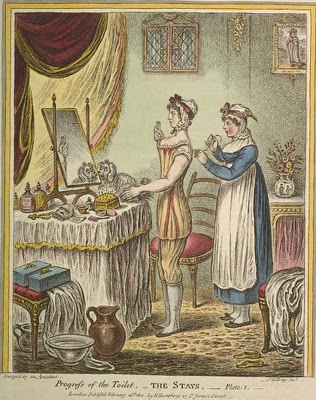
Eighteenth-century plays, novels, memoirs and even art and poetry are often concerned with what we know and how we know it. Vision plays a key role in defining and understanding knowledge in this period, especially with regard to knowledge of the gender and sexuality of eighteenth-century persons and characters. Consider the moment in which Fanny Hill looks through the peep hole and watches two young men engaging in a homosexual act only to fall over and faint before she can report them, or how actresses in breeches roles were admired and desired by both men and women for the spectacle they provided on stage. This roundtable solicits papers that will examine the various ways in which vision is queered in the eighteenth-century as well as how vision and the ability to see “queerly” affects who or what is understood to be “queer.”

In the spirit of shameless plugging, I’ve decided to dedicate a whole blog post to the topic in the hopes of promoting the roundtable. I’m hoping to get a really great discussion going at ASECS on the intersections of desire, perception and sexuality. These issues are, after all, deeply tied together.

My own research on female cross-dressers led me to the idea of “queer vision.” So often, the bodies of these women would give them away. A flash of boob, for example, and the jig was up—or was it? In Henry Fielding’s The Female Husband, Mary Hamilton’s breasts are exposed at a town dance—yet she retains her male disguise. According to Fielding’s narrator, the Doctor (Hamilton) enters into a dispute with a man at a local dance where she has been wooing her newest conquest, Mary Price. During the scuffle, the man “tore open her [Hamilton’s] wastecoat, and rent her shirt, so that all her breast was discovered, which, tho’ beyond expression beautiful in a woman, were of so different a kind from the bosom of a man, that the married women there set up a great titter” (46-47).

How Hamilton hides her superlatively perfect breasts in the guise of a man is left to the imagination of the reader. According to our narrator, “it did not bring the Doctor’s sex into an absolute suspicion, yet caused some whispers, which might have spoiled the match with a less innocent and less enamoured virgin” (47). It seems that Mary can only see what she wants to see; Fielding, by contrast, is coy as to what exactly he wants his readers to see: do we see Hamilton as a villain? a rake? a misguided criminal weirdo? a beautiful and attractive female husband?

The issue of perception and desire, however, is not limited to issues of cross-dressing or same-sex desires. These same issues play out in various ways on the eighteenth-century stage and in novels where concerns about disguise, class fluidity, “passing,” and masquerade show up again and again. For example, how could Clarissa not “see” Lovelace for what he was? Or could see it, but still desire him despite it?

It seems, perhaps, that despite innovations in visual technology, such as the microscope and the telescope, eighteenth-century writers were still quite concerned with how to see others, and how these various queer visions affect how others see us and whom we desire. The purpose of this roundtable will be to take a look at these issues from a variety of perspectives and through a variety of texts and artefacts. Artists as well as writers explored the notion of vision and desire in visual media such as paintings and cartoons. Other studies in material culture, such as costume studies, might also make some interesting interventions into this discussion.


For more info on submitting a proposal, go to the CFP. Paper proposals are due by Sept. 15, 2014.

For more on boobs, see my article on Maria Edgeworth's Belinda. 

Wednesday, February 5, 2014

To the Fair Clarinda: Imagining Aphra Behn

We don’t know much about our friend Aphra and her life (1640-1689), and what we do know is often contested. Unlike some authors who left us copious diaries or whose lives were documented by contemporary historians, Behn and her life are shrouded in mystery. She may have gone to Surinam; we’re really not sure. She was probably a spy for Charles II, Behn was probably her married name, and she was probably the first woman in England—or one of the very first—to make a living with her writing. We know she was a Royalist and a Catholic devoted to the house of Stuart, and the connection between her plays and political views are discernible in her works—although even that line of inquiry is often contentious.
            Even more uncertain, however, are her personal views on a variety of topics that she addresses in her works, which span several genres, from plays to poetry to novels and novellas. What did she think of the native peoples of the Americas? Of black slaves and slavery in general? Was she a feminist? A realist? An imperialist?
            Feminist scholars have held up Behn as an early promoter of women’s rights, a writer for whom the plight of women in the second half of the 17th century was of utmost importance and critique. Her poem “To the Fair Clarinda” suggests that she may have been sexually fluid (I prefer that term to saying she was bisexual), and in this poem she seems to be writing about loving a hermaphrodite or someone who embodies the traits of both men and women. Her short fictions “The Fair Jilt” and “The Fair Vow-Breaker” and the poem “The Disappointment” each appear to clearly critique the stifling social expectations of women in Restoration England.
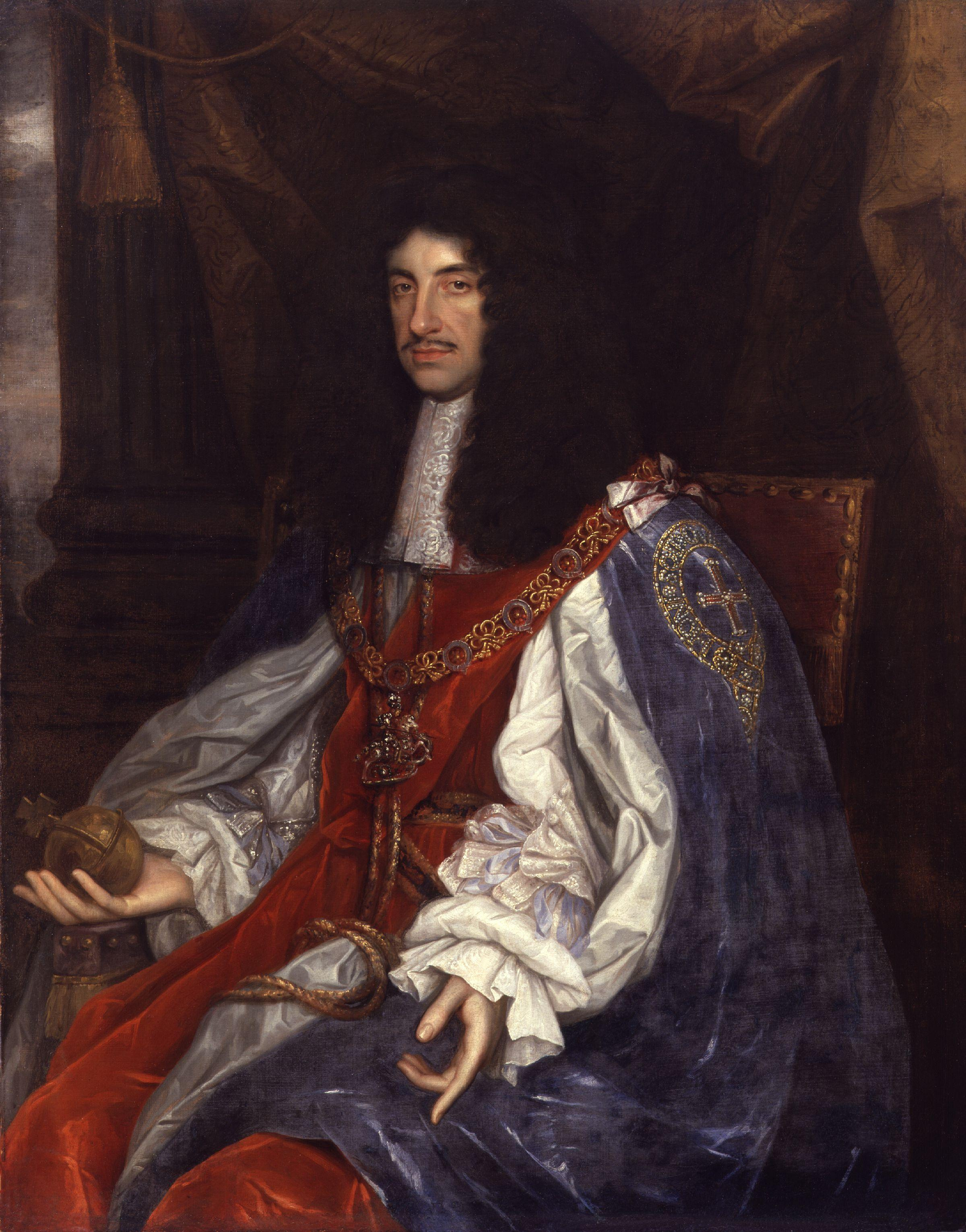
Charles II after his
1660 Restoration to the throne
On the other hand, Behn was also at the court of Charles II, a notorious libertine who enjoyed drinking, philandering, and generally having fun. As John Wilmot, 2nd Early of Rochester and another famous libertine once put it in his satire against Charles II, “thy prick, like thy buffoons at Court,/ Will govern thee because it makes thee sport.” Thus, some of the more problematic depictions of women in her plays, such as in The Rover, are often chalked up to the playwright’s need to appease her patron. 
By far her most famous work, the novella Oroonoko, which takes place in Africa and Surinam and contains both New World Indians as well as African Slaves, is often interpreted as an allegory about the fall of Charles I. It is also often faulted for portraying a romanticized view of the tragic African slaves, especially those who were supposedly of "royal" descent in their native Africa, as Oroonoko and his wife Imoinda are. The white female narrator of Oroonoko is usually read as Behn's problematic alter-ego, an Imperialist Englishwoman who at once sympathizes with but also Orientalizes the New World and its non-white inhabitants.
The Widow Ranter, her play which takes place in colonial Virginia, was by all accounts a failure when it was produced (which did not happen after her death). It is also considered by many scholars to be a metaphor for the fall of the house of Stuart in the wake of the Exclusion Crisis. Others see the play as further proof that she really did live in the Americas at some point during her lifetime and that the play’s failure was less about royalist politics and more about the fact that the English just didn’t like or respect Americans, which Behn portrays in both positive and negative lights in the play. The Widow Ranter may be interpreted as having problematic portrayals of Indians while taking the presence of black slaves for granted as merely set-pieces of the English colonies. Conversely, we might interpret the play as critiquing precisely the issues that some scholars believe her to be complacent about.
Was she truly a "feminist," an abolitionist, an adamant critic of imperialism and slavery? Or was she making use of timely topics to make good drama? As a feminist scholar myself, I like to think the former, and I believe that the bigger picture of her works confirms a deep-running vein of critique of the treatment of women and slaves in her works, even if, at times, her depictions of non-white peoples are somewhat romanticized. In the end, however, I think that what makes her works so intriguing is that they seem to epitomize what Barthes would call a writerly text: we as readers construct the text as we read it, and the text and its meaning are constantly eluding us. It is precisely the contradictory elements of Behn’s oeuvre that make her so fascinating to read and return to.
What did she even look like?
This portrait looks quite different than some of the others.
“A poet is a painter in his way, he draws to the life, but in another kind; we draw the nobler part, the soul and the mind; the pictures of the pen shall outlast those of the pencil, and even worlds themselves” 
–Aphra Behn, Oroonoko