Showing posts with label EL James. Show all posts

Friday, February 20, 2015

Cinderella Meets the Byronic Hero

Although I’ve blogged here before about 50 Shadesof Grey, and I recently blogged here about the persistence of the Cinderella myth, I’m going to bring it all up again. The much-anticipated 50 Shades film recently came out, just in time for that most horrifying of holidays, Valentine’s Day, and many of us literary folk have been scratching our heads as to why, exactly, a poorly-written, poorly-plotted, sex-negative “mommy-porn” has made so much money and appealed to so many women.

Mad, bad & sexy!
Lord Byron
To me, the reasoning is fairly simple, though I will caveat my argument with the fact that I have read the books, but I have not yet seen the movie. Going by the books, however, it seems pretty obvious that 50 Shades combines two (possibly three) very powerful cultural myths: that of the rags-to-riches story (cue Cinderella) and the rake-reformed (cue the Byronic hero).

Although 50 Shades began as a Twilight fan fic, it owes almost as much to Pretty Woman as it does to its vampire progenitor. Pretty Woman is obviously a reworking of the Cinderella story, but if we look closely, we can see that it is also a story about bringing a sardonic, isolated, and brooding billionaire back to life—just like 50 Shades of Grey.

The Byronic hero or antihero (your choice) has his own gravitational pull. He is mysterious, alluring, charming, brooding, prone to outbursts, and intellectually superior to those who surround him. He is doing penance for an unknown past sin, suggesting emotional vulnerability obscured by a carapace of irony and self-loathing. He is cocky, self-assured, highly intelligent and, of course, wildly attractive, handsome, sexy, etc.

It’s hard to find a television drama these days without a version of our beloved Byronic hero—named after Romantic poet Lord Byron who was described by a contemporary as “mad, bad, and dangerous to know.” The archetype of the Byronic hero draws on both Byron’s personality as well as on his works—such as the character Manfred in the closet drama of the same name. Other Romantic and Gothic texts took up the rough outlines of the Byronic hero and helped build up his allure.

Victor Frankenstein, Heathcliff, Mr. Rochester, Sherlock Holmes and Eugene Onegin are some nineteenth-century examples that contributed to the growth of interest in this type of hero. Today, the obsession continues with various Sherlock Holmes movies and shows (Elementary and Sherlock), Dr. House, the entire Batman franchise, Edward Cullen and now Christian Grey.

Michael Fassbender as Mr. Rochester.
He's so tormented! Don't you just want to make him a sandwich?
The idea that a woman could “fix” the bad boy Byronic hero and open his heart to love has been around a long time as well. In some cases, our heroines succeed (Jane marries Mr. Rochester, though only after becoming financially independent); in others, they don’t even bother trying (Cathy is her own kind of Byronic heroine in Wuthering Heights, one could argue).

One of the most alluring conceits in the 50 Shades of Grey series is, no doubt, that Anastasia Steele succeeds in reforming her rake and, even more potently, that it is her innocence, purity, and tenderness that tame the beast (cue the Beauty and the Beast myth). While outwardly the novels appear to be about Christian’s dominance over Ana (and many feminists have castigated the work for supposedly glorifying stalker-like, abusive behavior in romantic relationships), at the heart of the appeal of 50 Shades of Grey is the powerful notion that this young woman is the only person powerful enough and special enough to reform Christian and his sexual deviance.

One of the earliest press release photos
underscores the difference between Ana
and Christian: college student and
sexy billionaire.
Ana is so morally and emotionally pure, that not only is she a virgin before she meets Christian, but she refuses many of his monetary gifts. She doesn’t want him for his money—though ultimately his money is the other crucial part of the powerful fantasy and appeal of E.L. James’s novels. Christian is so wealthy, that Ana’s money problems are solved forever once they get together. His wealth means most people are at his command—but not Ana. Though she agrees (sporadically) to be his submissive in the bedroom, she is constantly challenging him. Although she is physically weaker, younger, and financially insolvent in comparison with her lover, it is actually Ana (the woman) in the relationship who wields the real (emotional) power—and who “wins” at the end of the novel. Winning here means helped Christian leave behind the world of BDSM (mostly, anyway) in exchange for domestic bliss (and “vanilla sex”).

That is a powerful fantasy. And that, to me, is why these books are so addictive. It’s not just the sex. And it’s not because all these women are yearning to be in abusive relationships. It’s because these novels draw on culturally-embedded myths: Beauty and the Beast, Cinderella, the Byronic Hero. Further, they take these myths and rework them into a female fantasy in which empowerment is only necessary insofar as you are able to change your sexy, brooding Byronic hero into a sexy, no-longer-brooding billionaire husband and baby-daddy. Thematically, thus, 50 Shades of Grey is not so different than Pamela or Jane Eyre.


No doubt poor Charlotte Brontë is spinning in her grave!

Now, don't misunderstand me...there is plenty that is problematic, to say the least, about these novels and the spin-offs they have engendered. But it seems worthwhile to look at them in the context of archetypes and cultural myths, for they reveal the persistence of certain ideas in our culture. Further, literature has always been a place in which to explore (and create) fantasies in a safe place. Eighteenth-century fictions presented their readers with heroines in sticky situations, often for the purposes of entertainment--not always for moral instruction. 

We can read Eliza Haywood's Fantomina, for example, as a text about a deeply misguided young woman brought to the brink of obsession by a man. Or, we can read her as a conniving, powerful young woman in control of her sexuality. Both Fantomina and 50 Shades illustrate certain persistent inequalities in our society without making a definitive judgment about these inequalities.

This is not to suggest that 50 Shades is important in any "literary" way. It's poorly written with ridiculous dialogue and flat characterizations. It's erotica, and by definition erotica is repetitive--there's only so many ways to go about that particular business. But the very popularity of 50 Shades and its protagonists is what makes them so interesting to consider.

Saturday, July 26, 2014

50 Shades of a Woman of Pleasure

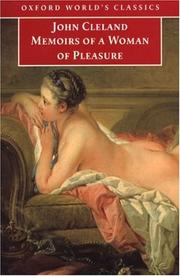
I know it’s not fair to compare 50 Shades of Grey to John Cleland’s Memoirs of a Woman or Pleasure; or, Fanny Hill. After all, in many ways, they are completely different; yet, as we shall see, there are some compelling reasons to consider them together.

50 Shades of Grey tells the story of a young woman finishing college who is first seduced by a sexy billionaire, only to turn the tables and become the one in charge. While the media made much of the novel’s S&M plot twists, in the end, it is really a novel about how the woman in the relationship, Anastasia Steele, “fixes” her gentle brute, Christian Grey, changing his sexual tastes from BDSM to “vanilla sex.” (That’s what the book calls it—I kid you not.) Additionally, the book initially began as a Twilight fan fic, was written by a woman for other women, and, of course, is a product of 21st-century America.

Fanny Hill, by contrast, tells the story of a young woman who falls in with the wrong crowd but eventually comes into her own (pun intended). Initially, she is picked up by a madam in the hopes that her virginity will fetch the right price; while Fanny is shocked at this idea at first, she comes around (again, pun intended) and learns to love and enjoy sex with men (sex with women being a far inferior proposition—of course, 50 Shades of Grey never even glances in that direction…). Fanny has many different partners over the course of the novel, has sex for money, engages in orgies, and has no career ambitions aside from being the loving and repentant wife of her first sexual partner, Charles, from whom she is parted for most of the novel. The novel was written by a man for other men, in the middle of the eighteenth century, in England.


What with the film version of 50 Shades coming out just in time for next Valentine’s Day and the official trailer finally out, however, I couldn’t help comparing them. Both novels are by far the most influential erotic tales of their own time, and both are written in the voice of a young woman who is entering the adult world for the first time. No matter that Fanny is a teenager while Anastasia is about to finish college; the difference in age is a minor fact. Additionally of note is the tone that the two works use: both works insist on a fairly romantic view of sex and sexual encounters, eschewing words like “penis” or “fucking.” While E.L. James resorts to a kind of bodily synecdoche to describe sex, as in “he entered me,” Cleland makes use of a variety of colorful metaphors for the male member, including but not limited to “weapon of pleasure,” “the engine of love-assaults,” “truncheon,”, “may-pole,” “pick-lock,” “delicious stretcher,” “superb piece of furniture,” and “pleasure-pivot.”

Both authors are also quite adamant that S&M is a lesser pleasure compared to conventional sex between a male and female partner. When asked to flagellate a man who gets off that way, Fanny acquiesces but is puzzled by the pleasure the man gets from this act. While BDSM plays a much larger role in 50 Shades, the novel’s protagonist Anastasia has a similar aversion to such activities.
 
Fanny and the flagellant, Mr. Barville.
Lastly, both novels ultimately champion a single bond between two (heterosexual) people who marry, in the end, and live a rather conventional lifestyle—an interesting ending for works so committed to titillating their audiences. In many ways, however, as a reader, I find Fanny Hill a more stimulating, entertaining, and interesting read than 50 Shades.

Much has been written already about the many different ways we can read Fanny Hill. Fanny enjoys the attentions of Phoebe Ayres, even as she rejects them for not being “substantial” enough. At the same time, she outright rejects sex between two men as immoral. She has no problem, though, participating in orgies and watching others participate in them. She is both a participant and a voyeur, and the voyeuristic qualities of the novel’s heroine, as well as her evident pleasure in recounting her past escapades (which she is meant to be confessing to an unnamed woman….yet another literary question mark) suggest that there are many pleasures to be found in the novel. Even though the novel ultimately resolves Fanny’s problems through conventional means—marriage to the man she first had sex with—there are plenty of different ways to read and interpret Cleland’s pornotopia.

50 Shades of Grey is not exactly simplistic, by comparison, but its single-minded focus on “fixing” Christian Grey and Anastasia’s reluctant dabbling in his BDSM fantasies are both grating and, frankly, not very pleasurable. The novel takes the point of view that Christian wants to dominate his female “subs” only because he was physically abused as a child. Such a point of view is, of course, incorrect. Many mentally- and emotionally-healthy people engage in various types of BDSM-play in their sexual lives, and there is nothing inherently unhealthy about such fantasy play. Of course, the fact that Anastasia cannot “escape” her attraction to Christian and Christian’s attraction to her is yet another problematic aspect of the novel lifted directly from the Twilight series: the male must protect his female object of desire through what basically amounts to stalking even though it is precisely their relationship that puts the woman in danger in the first place.

This online cartoon pokes holes
in the Edward-Bella romance.
It seems almost as if modern women’s sexual and romantic fantasies are predicated on this trope of danger and protection 50 Shades and Twilight and heaven knows how many other romance novels propagate. While Fanny Hill is light-years away from being a feminist erotic novel, its heroine is able to survive because of her quick learning abilities. Fanny learns from Phoebe and the madams how to survive on the streets of London with nothing but her brains and her body to see her through. Like Moll Flanders and Roxana, Fanny is able to squirrel away money for later use. Like Pamela, an unlikely but obvious prototype for Cleland’s heroine, Fanny finally gets what she wants—stability, money and marriage for love—while having a whole hell of a lot more fun than Samuel Richardson’s too-good-to-be-true protagonist.

This is not to say that the eighteenth-century didn’t have its share of dangerous but seductive rakes—cue Richardson’s Lovelace. Or Jane Austen’s George Wickham. The difference is that in the end, Clarissa would rather die than be with Lovelace and Lizzy Bennet lets her dumb sister Lydia fall for the rake.  She doesn’t try to “fix” him; she throws him over and marries the more sensible (and moneyed) option, Mr. Darcy. Our 20th and 21st century fantasy, according to money-makers like Pretty Woman and 50 Shades of Grey, is a Byronic hero with money to burn who just needs a woman’s touch to be the ideal Prince Charming. Oddly enough, though Fanny loves her Charles, he isn’t Prince Charming—he’s hardly in the book at all. Instead, Fanny holds first place in her story as the main actor who controls her destiny.


Am I too biased, being an eighteenth-centuryist? Perhaps. But since there’s still another month of summer left, I suggest you read these books and decide for yourself. After all, they are practically the definition of summer reading.

Beach reading!
...though then again, you might not want to read these books in public...