Showing posts with label feminism. Show all posts

Wednesday, October 14, 2015

Two Feminisms: Mary Astell and Hortense Mancini


Hortense Mancini,
Duchess of Mazarin
It happens more often than I’d like to admit: despite writing an entire dissertation on cross-dressing women in British literature and culture of the long eighteenth century, I find I’ve overlooked a prominent female cross-dresser. Today’s case is that of Hortense Mancini, Duchess of Mazarin, and one of Charles II’s many mistresses.

Mancini’s flamboyant, exciting, and at times perilous life has been documented and described not only in books, like her biography The Mazarin Legacy, by Toivo David Rosvall and in Elizabeth C. Goldsmith’s The King’s Mistresses, but also in various wonderful blog posts on the blogs Two Nerdy History GirlsThe Monstrous Regiment of WomenWonders and Marvels, as well as MadameGuillotine.

 I, however, learned about Mancini just today as I was considering including Mary Astell, the “first British feminist”, in the Month of Dangerous Women on my own blog. Astell’s Some Reflections UponMarriage was written in direct response to the case of the Duchess of Mazarin and her husband’s suing for divorce after many years of separation.

Protofeminist Mary Astell
Astell’s opinion of the case is tinged with condemnation of Mancini’s behavior; Astell was, after all, a rather conservative feminist. She writes that “Had Madam Mazarine's Education made a right improvement of her Wit and Sense, we should not have found her seeking Relief by such imprudent, not to say Scandalous Methods, as the running away in Disguise with a spruce Cavalier, and rambling to so many Courts and Places, nor diverting her self with such Childish, Ridiculous, or Ill-natur'd Amusements, as the greatest part of the Adventures in her Memoirs are made up of.”

Oh yes, did I mention? Mancini published her memoirs…I can’t wait to get my hands on those!

In any case, however, to return to Astell, I was intrigued, naturally, by her claims. Some quick research into the life of Mancini revealed not only that she frequently cross-dressed as a man, but also that she openly had lovers of both sexes and, at one point, engaged in a duel with swords with Anne Lennard, Countess of Sussex, the illegitimate fifteen-year-old daughter of Charles II by another of his mistresses, Barbara Villiers. Lennard was most likely also one of Mancini’s female lovers at court. 

Whatever Astell thought of Mancini and her “ill-natured amusements,” Hortense Mancini reminds us that there were women in the past who lived life fully, dangerously, and dashingly, with little regard to what the rest of the world thought of them. This is not to say that Astell was wrong about everything either. Astell’s thoughts on marriage and divorce reveal a woman far  beyond her time, one who believed that

“To be yoak'd for Life to a disagreeable Person and Temper; to have Folly and Ignorance tyrannize over Wit and Sense; to be contradicted in every thing one does or says, and bore down not by Reason but Authority; to be denied ones most innocent desires for no other cause, but the Will and Pleasure of an absolute Lord and Master, whose follies a Woman with all her Prudence cannot hide, and whose Commands she cannot but despise at the same time she obeys them, is a misery none can have a just Idea of, but those who have felt it.”

Clearly Astell believed that men and women should have simpler, more direct recourse to divorce in cases where the relationship is of no benefit to one or both of sides of it. In the Reflections, as well as in her Serious Proposal to the Ladies, Astell eviscerates many of the common marital practices of her time period while advocating for greater educational opportunities for women.

For these reasons, this week’s contribution to the Dangerous Women series is a double-whammy. Hortense Mancini and Mary Astell were both “dangerous women” by my definition—they dared to step beyond the “traditional” role of women, to assert themselves as independent, free-thinking individuals, and to challenge society’s expectations for their sex.

The lives of these women and their writings also made me think about the different feminisms and forms of female empowerment that women espouse today. Feminism is still stigmatized in our society—as are women of strength, independence, power, and intelligence.
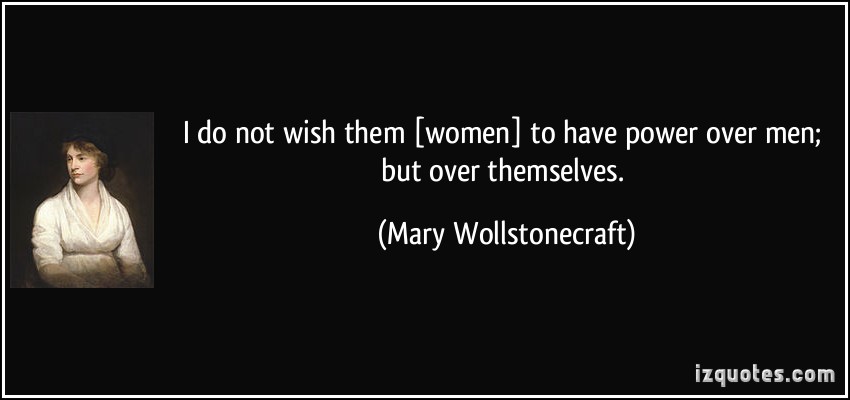
 
Another early feminist, Mary Wollstonecraft, believed like Astell that women needed
education in order to empower themselves and their countries.
This quotation of hers, however, is ambiguous enough to encompass a variety
of different ways in which women today might gain "power over themselves."
Mancini epitomizes women who live as they wish, who use their relationships with men to facilitate and support their lives and interests, who live freely but perhaps without knowledge of or interest in academic debates on feminism. Conversely, Astell epitomizes women who believe that if women want equality and respect, they must be educated, intelligent, and aware of how their behavior may at times contribute to their oppression.

These are only two attitudes, of course, towards female empowerment and feminism, and many men and women’s ideas may fall somewhere in between. Further, many of us draw on both of these women’s attitudes during our everyday lives. I don’t think these ideas and attitudes have to be opposed to each other, either. Contemporary feminism emphasizes choice, and I choose to admire both Mancini and Astell for their determination, intelligence, independence and panache, however they ultimately chose to express themselves.

Wednesday, January 14, 2015

The Cinderella Complex: On the lasting effects of Pamela

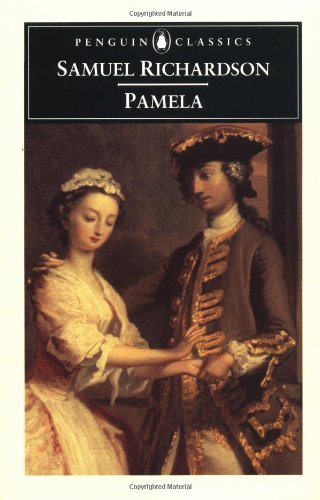
It is a truth universally acknowledged that the second half of Pamela is not nearly as interesting as the first half. The first half of the novel details Pamela and Mr. B’s strange S&M-type relationship which includes multiple attempted rapes, kidnapping, beatings and verbal abuse of Pamela at the hands of her future husband.

The second half of the novel draws out their engagement, secret wedding, meeting the neighbors and finally reconciliation with Mr. B’s sister, Lady Davers. Lady Davers takes a lot of convincing, as she herself is of the conviction that by marrying Pamela, his mother's waiting-maid, Mr. B has debased himself. As they argue, Lady Davers tries to show her brother the error of his ways by suggesting that his marriage is the same as if she had married her groom.

“[Lady Davers:] Where can the Difference be between a Beggar’s Son marry’d by a Lady; or a Beggar’s Daughter made a Gentleman’s Wife?

Then I’ll tell you, reply’d he [Mr. B]; The Difference is, a Man ennobles the Woman he takes, be she who she will; and adopts her into his own Rank, but it what it will: But a Woman, tho’ ever so nobly born, debases herself by a mean Marriage, and descends from her own Rank, to his she stoops to.”

Mr. B’s answer perfectly sums up a sentiment shared by many people in the Western world from the eighteenth century onward. Even now, one might argue, there are those who would agree with his statement.

Such a statement might have made sense in the eighteenth century, as legally, a woman became her husband’s property upon marriage back then. In England, she automatically lost her maiden name upon marriage, as well. For many decades, anything a woman earned was considered her husband’s or her father’s property, and her wages could be garnished by the man of the house and spent by him as he wished.

Thus, an eighteenth-century author like Samuel Richardson truly would believe that it was the man’s rank that determined his wife’s—never vice versa.

It’s much harder, I think, to understand why so many people still believe in this idea today. Women have joined the work force, we have entered into some of the highest spheres in the workplace, and we have made many strides towards equality. 

At the same time men are still the primary breadwinner in most families around the world—and even in the Western world. Many men still have a hard time squaring the idea that they might stay at home while their wives go to work—even as the numbers of “stay at home dads” increase. Similarly, the lack of childcare options in the US, coupled with the shortest amount of paid maternity leave in the Western world mean that it still makes more “financial sense” for women to stay home with the children while their husbands go to work. (Of course, the lack of any kind of paternity leave for fathers only exacerbates these trends.)
Even in 2011, only 9.5% of fathers are the primary care-givers for children.
That's nowhere near 50%...
On the other hand, to go back to the eighteenth century, there were many men and women who deplored the subordinate condition of women and who spoke out against it. Mary Astell, Anne Finch, the women of the Bluestocking group, Jeremy Bentham, and Mary Wollstonecraft are just some of the many writers, both male and female, who railed against the oppression and unequal treatment of women.

Were there any upper-class women who married far below them, in the manner of Mr. B and Pamela? Were there any writers who challenged Richardson’s implicit sense of righteousness that only a man could “ennoble” his wife—never vice versa? If my readers know of any, I’d be excited to hear about it.

Class is a slippery topic, more ephemeral, in some ways, than either gender or race. How do we identify class? Titles, money, family name, income vs. inheritance, position, tastes, and background all play a part. It is possible to be of a high class but to be poor (consider the impoverished nobility of the eighteenth and nineteenth centuries). It is possible to have wealth but retain lower-class tastes that taint one in the eyes of the upper classes (such as those who are deemed the nouveau-riche).

Pamela is considered so revolutionary precisely because it illustrates the changing categories of class in the eighteenth century. Pamela is allowed to be ennobled because she is so virtuous—but also, because she is so beautiful. In the novel, beauty and virtue are joined together, just as Mrs. Jewkes must be ugly because she has such low, evil tastes. Later female authors, like Frances Burney and Jane Austen, explicitly challenge the notion that beauty and virtue are always joined.

We can't get enough of Jane & Rochester!
Of course, it’s impossible to discount the far-reaching effects Pamela has on English literature. It’s hard to read Pamela without also immediately thinking about Jane Eyre, for example, and how Charlotte Bronte changes the ending so that Jane and Rochester are more equal—by making Jane financially independent. Even Pride and Prejudice is, to an extent, a rewriting of Pamela, where Lizzy is rewarded with a rich husband, but not for being a servile, virtuous virgin—for being an independent-thinking, witty young woman.

The Cinderella-complex that persists in all of these texts—and that still persists, even now, in popular films, television series, and best-selling novels—is perhaps the more disturbing phenomenon. As a culture we continually insist on telling young women that they should wish, hope, dream of having their problems solved by marriage to a handsome, wealthy man rather than becoming wealthy and powerful themselves…probably because wealthy, powerful women are much harder to control.


We love the myth of Cinderella so much, we've got 2 more film versions coming out, just this year!

Saturday, July 26, 2014

50 Shades of a Woman of Pleasure

I know it’s not fair to compare 50 Shades of Grey to John Cleland’s Memoirs of a Woman or Pleasure; or, Fanny Hill. After all, in many ways, they are completely different; yet, as we shall see, there are some compelling reasons to consider them together.

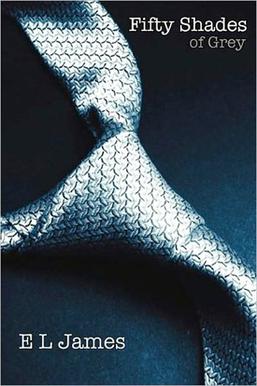
50 Shades of Grey tells the story of a young woman finishing college who is first seduced by a sexy billionaire, only to turn the tables and become the one in charge. While the media made much of the novel’s S&M plot twists, in the end, it is really a novel about how the woman in the relationship, Anastasia Steele, “fixes” her gentle brute, Christian Grey, changing his sexual tastes from BDSM to “vanilla sex.” (That’s what the book calls it—I kid you not.) Additionally, the book initially began as a Twilight fan fic, was written by a woman for other women, and, of course, is a product of 21st-century America.

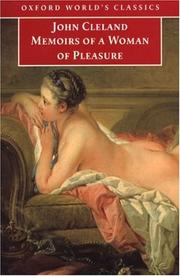
Fanny Hill, by contrast, tells the story of a young woman who falls in with the wrong crowd but eventually comes into her own (pun intended). Initially, she is picked up by a madam in the hopes that her virginity will fetch the right price; while Fanny is shocked at this idea at first, she comes around (again, pun intended) and learns to love and enjoy sex with men (sex with women being a far inferior proposition—of course, 50 Shades of Grey never even glances in that direction…). Fanny has many different partners over the course of the novel, has sex for money, engages in orgies, and has no career ambitions aside from being the loving and repentant wife of her first sexual partner, Charles, from whom she is parted for most of the novel. The novel was written by a man for other men, in the middle of the eighteenth century, in England.


What with the film version of 50 Shades coming out just in time for next Valentine’s Day and the official trailer finally out, however, I couldn’t help comparing them. Both novels are by far the most influential erotic tales of their own time, and both are written in the voice of a young woman who is entering the adult world for the first time. No matter that Fanny is a teenager while Anastasia is about to finish college; the difference in age is a minor fact. Additionally of note is the tone that the two works use: both works insist on a fairly romantic view of sex and sexual encounters, eschewing words like “penis” or “fucking.” While E.L. James resorts to a kind of bodily synecdoche to describe sex, as in “he entered me,” Cleland makes use of a variety of colorful metaphors for the male member, including but not limited to “weapon of pleasure,” “the engine of love-assaults,” “truncheon,”, “may-pole,” “pick-lock,” “delicious stretcher,” “superb piece of furniture,” and “pleasure-pivot.”

Both authors are also quite adamant that S&M is a lesser pleasure compared to conventional sex between a male and female partner. When asked to flagellate a man who gets off that way, Fanny acquiesces but is puzzled by the pleasure the man gets from this act. While BDSM plays a much larger role in 50 Shades, the novel’s protagonist Anastasia has a similar aversion to such activities.
 
Fanny and the flagellant, Mr. Barville.
Lastly, both novels ultimately champion a single bond between two (heterosexual) people who marry, in the end, and live a rather conventional lifestyle—an interesting ending for works so committed to titillating their audiences. In many ways, however, as a reader, I find Fanny Hill a more stimulating, entertaining, and interesting read than 50 Shades.

Much has been written already about the many different ways we can read Fanny Hill. Fanny enjoys the attentions of Phoebe Ayres, even as she rejects them for not being “substantial” enough. At the same time, she outright rejects sex between two men as immoral. She has no problem, though, participating in orgies and watching others participate in them. She is both a participant and a voyeur, and the voyeuristic qualities of the novel’s heroine, as well as her evident pleasure in recounting her past escapades (which she is meant to be confessing to an unnamed woman….yet another literary question mark) suggest that there are many pleasures to be found in the novel. Even though the novel ultimately resolves Fanny’s problems through conventional means—marriage to the man she first had sex with—there are plenty of different ways to read and interpret Cleland’s pornotopia.

50 Shades of Grey is not exactly simplistic, by comparison, but its single-minded focus on “fixing” Christian Grey and Anastasia’s reluctant dabbling in his BDSM fantasies are both grating and, frankly, not very pleasurable. The novel takes the point of view that Christian wants to dominate his female “subs” only because he was physically abused as a child. Such a point of view is, of course, incorrect. Many mentally- and emotionally-healthy people engage in various types of BDSM-play in their sexual lives, and there is nothing inherently unhealthy about such fantasy play. Of course, the fact that Anastasia cannot “escape” her attraction to Christian and Christian’s attraction to her is yet another problematic aspect of the novel lifted directly from the Twilight series: the male must protect his female object of desire through what basically amounts to stalking even though it is precisely their relationship that puts the woman in danger in the first place.

This online cartoon pokes holes
in the Edward-Bella romance.
It seems almost as if modern women’s sexual and romantic fantasies are predicated on this trope of danger and protection 50 Shades and Twilight and heaven knows how many other romance novels propagate. While Fanny Hill is light-years away from being a feminist erotic novel, its heroine is able to survive because of her quick learning abilities. Fanny learns from Phoebe and the madams how to survive on the streets of London with nothing but her brains and her body to see her through. Like Moll Flanders and Roxana, Fanny is able to squirrel away money for later use. Like Pamela, an unlikely but obvious prototype for Cleland’s heroine, Fanny finally gets what she wants—stability, money and marriage for love—while having a whole hell of a lot more fun than Samuel Richardson’s too-good-to-be-true protagonist.

This is not to say that the eighteenth-century didn’t have its share of dangerous but seductive rakes—cue Richardson’s Lovelace. Or Jane Austen’s George Wickham. The difference is that in the end, Clarissa would rather die than be with Lovelace and Lizzy Bennet lets her dumb sister Lydia fall for the rake.  She doesn’t try to “fix” him; she throws him over and marries the more sensible (and moneyed) option, Mr. Darcy. Our 20th and 21st century fantasy, according to money-makers like Pretty Woman and 50 Shades of Grey, is a Byronic hero with money to burn who just needs a woman’s touch to be the ideal Prince Charming. Oddly enough, though Fanny loves her Charles, he isn’t Prince Charming—he’s hardly in the book at all. Instead, Fanny holds first place in her story as the main actor who controls her destiny.


Am I too biased, being an eighteenth-centuryist? Perhaps. But since there’s still another month of summer left, I suggest you read these books and decide for yourself. After all, they are practically the definition of summer reading.

Beach reading!
...though then again, you might not want to read these books in public...

Wednesday, February 5, 2014

To the Fair Clarinda: Imagining Aphra Behn

We don’t know much about our friend Aphra and her life (1640-1689), and what we do know is often contested. Unlike some authors who left us copious diaries or whose lives were documented by contemporary historians, Behn and her life are shrouded in mystery. She may have gone to Surinam; we’re really not sure. She was probably a spy for Charles II, Behn was probably her married name, and she was probably the first woman in England—or one of the very first—to make a living with her writing. We know she was a Royalist and a Catholic devoted to the house of Stuart, and the connection between her plays and political views are discernible in her works—although even that line of inquiry is often contentious.
            Even more uncertain, however, are her personal views on a variety of topics that she addresses in her works, which span several genres, from plays to poetry to novels and novellas. What did she think of the native peoples of the Americas? Of black slaves and slavery in general? Was she a feminist? A realist? An imperialist?
            Feminist scholars have held up Behn as an early promoter of women’s rights, a writer for whom the plight of women in the second half of the 17th century was of utmost importance and critique. Her poem “To the Fair Clarinda” suggests that she may have been sexually fluid (I prefer that term to saying she was bisexual), and in this poem she seems to be writing about loving a hermaphrodite or someone who embodies the traits of both men and women. Her short fictions “The Fair Jilt” and “The Fair Vow-Breaker” and the poem “The Disappointment” each appear to clearly critique the stifling social expectations of women in Restoration England.
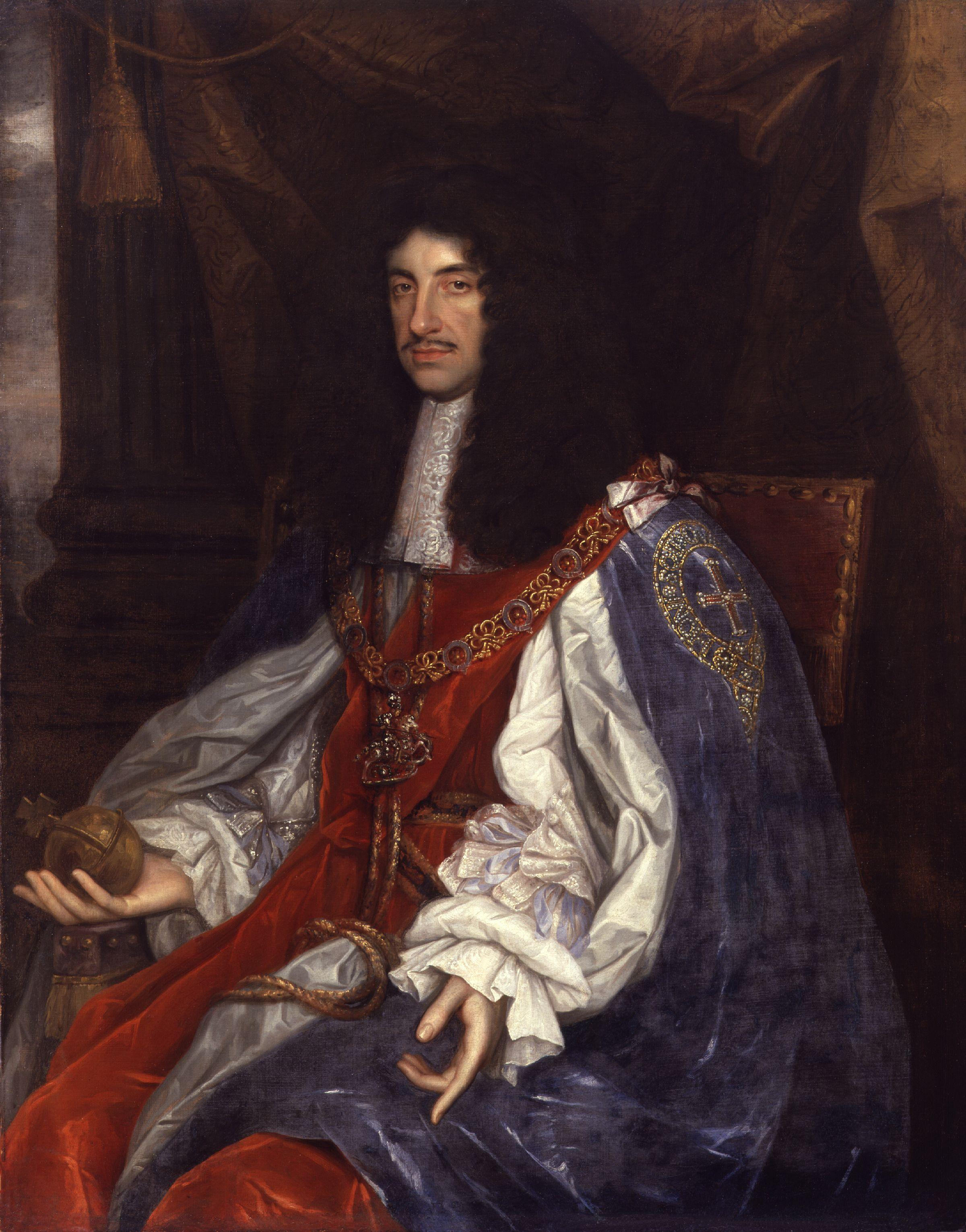
Charles II after his
1660 Restoration to the throne
On the other hand, Behn was also at the court of Charles II, a notorious libertine who enjoyed drinking, philandering, and generally having fun. As John Wilmot, 2nd Early of Rochester and another famous libertine once put it in his satire against Charles II, “thy prick, like thy buffoons at Court,/ Will govern thee because it makes thee sport.” Thus, some of the more problematic depictions of women in her plays, such as in The Rover, are often chalked up to the playwright’s need to appease her patron. 
By far her most famous work, the novella Oroonoko, which takes place in Africa and Surinam and contains both New World Indians as well as African Slaves, is often interpreted as an allegory about the fall of Charles I. It is also often faulted for portraying a romanticized view of the tragic African slaves, especially those who were supposedly of "royal" descent in their native Africa, as Oroonoko and his wife Imoinda are. The white female narrator of Oroonoko is usually read as Behn's problematic alter-ego, an Imperialist Englishwoman who at once sympathizes with but also Orientalizes the New World and its non-white inhabitants.
The Widow Ranter, her play which takes place in colonial Virginia, was by all accounts a failure when it was produced (which did not happen after her death). It is also considered by many scholars to be a metaphor for the fall of the house of Stuart in the wake of the Exclusion Crisis. Others see the play as further proof that she really did live in the Americas at some point during her lifetime and that the play’s failure was less about royalist politics and more about the fact that the English just didn’t like or respect Americans, which Behn portrays in both positive and negative lights in the play. The Widow Ranter may be interpreted as having problematic portrayals of Indians while taking the presence of black slaves for granted as merely set-pieces of the English colonies. Conversely, we might interpret the play as critiquing precisely the issues that some scholars believe her to be complacent about.
Was she truly a "feminist," an abolitionist, an adamant critic of imperialism and slavery? Or was she making use of timely topics to make good drama? As a feminist scholar myself, I like to think the former, and I believe that the bigger picture of her works confirms a deep-running vein of critique of the treatment of women and slaves in her works, even if, at times, her depictions of non-white peoples are somewhat romanticized. In the end, however, I think that what makes her works so intriguing is that they seem to epitomize what Barthes would call a writerly text: we as readers construct the text as we read it, and the text and its meaning are constantly eluding us. It is precisely the contradictory elements of Behn’s oeuvre that make her so fascinating to read and return to.
What did she even look like?
This portrait looks quite different than some of the others.
“A poet is a painter in his way, he draws to the life, but in another kind; we draw the nobler part, the soul and the mind; the pictures of the pen shall outlast those of the pencil, and even worlds themselves” 
–Aphra Behn, Oroonoko