Thursday, September 24, 2015

The Black Widow of Jamaica

BIGAMIST AND BLACK WIDOW, BUT NEVER A NOVELIST:
Teresia Constantia Phillips (1709-65)
A Guest Post by Amanda L. Johnson, Rice University

“We hope you will consider Mrs. Muilman as an Historian, and not a Novelist; and therefore obliged to tell Facts as they were, and not as they might have been.” So begins An Apology for the Conduct of Mrs. T.C. Phillips, a “scandal memoir” by a woman born Teresia Constantia Phillips, who in the text keeps her married name “Muilman,” despite her husband’s estrangement. Calling her narrative “An Apology,” Phillips presents what the ancient Greeks called an apologia, or statement of justification for her scandalous life. Throughout the text, Phillips refers to herself (“Mrs. Muilman”) as an “Apologist” and also an “Historian,” but never a “Novelist,” though the events of her life, can read like the stuff of fiction.
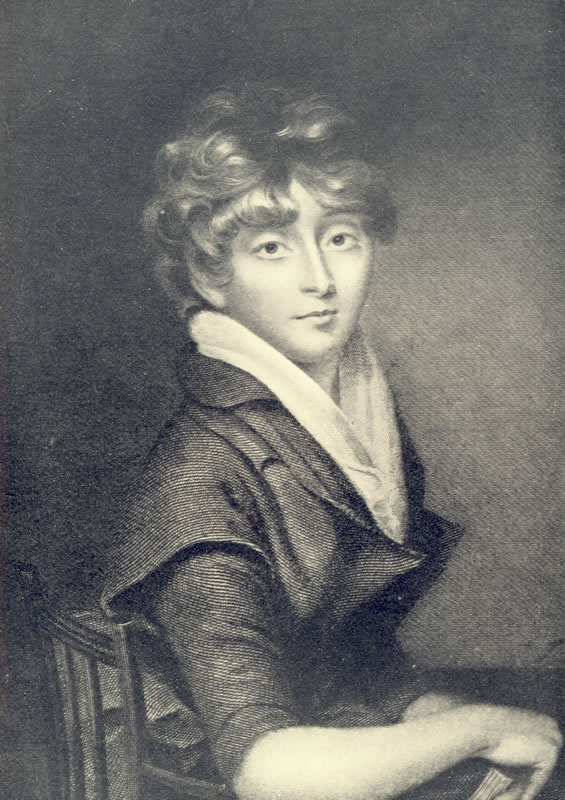
Teresia and her "history."
Abandoned by her father on his second marriage, Phillips was at thirteen attacked by Philip Stanhope, nephew to the Earl of Chesterfield.1 After living as Stanhope’s mistress for a while, Phillips was on her own, and quickly accumulating debt. Desperate, she then got married, knowing that any property—as well as any debt—a woman had in her name would become her husband’s upon their marriage. Phillips’ chosen groom, a Mr. Delafield, was already married, and as a professional bigamist, was paid to “marry” women to divert aggressive debt collectors. Thus free of creditors, Phillips was also still free to marry her true love, a Dutch merchant named Muilman, and their marriage was a happy one until Phillips’ father-in-law learned of her first nuptial ceremony and demanded that his son leave her or be disinherited.
            Phillips relates these events in her Apology with striking boldness, making clear that her encounter with Stanhope was a rape, not a “seduction.” She also freely admits that she accepted financial support from Stanhope for some time thereafter—what was she to do, she asks the reader, living without any parental support and with younger family members to provide for? As a woman who also felt confident expressing her own sexual desire as she got older, Phillips would later go on to have a series of consensual relationships with powerful men, relationships that took her around Europe and even to the American colonies. In this respect, Phillips came to resemble Daniel Defoe’s Roxana (1724), a heroine who, left penniless, adopts the life of a “kept woman” and accumulates a fortune from her companions.
An illustration of Roxana in her "turkish habit."
            Phillips’ calculating flirtation with bigamy also brings to mind Defoe’s more famous heroine, Moll Flanders, a woman who, in her travels, marries several times, once to her own half-brother! Apology, she is not ashamed to state what she thinks she is owed.
Like Roxana, Moll also ends up comfortably wealthy near the end of her tale. Phillips was not as lucky with her finances, as she continued to support her sister and her sister’s children throughout her life. As she herself enjoyed the finer things in life, money was spent as soon as it was collected, and Phillips’ male companions, it seemed, would abandon her capriciously. She laments she did not even receive any financial support for a child that she bore with one of her lovers, and claims that for this reason, the child, denied medical care, only lived to be five. As a woman, Phillips’ options were limited, and her powerful, wealthy lovers knew that—for this reason, Phillips, says in her
It is this level of resolve, once more, that kept Phillips going as her marriage to Muilman unraveled. For years, Phillips and Muilman lived estranged, though Phillips steadfastly maintained that she was Muilman’s lawful wife and thus deserved his financial support. Muilman, for his part, alternated between trying to bully her physically into dropping her suit, and begging her to live with him as his mistress. (Phillips strongly implies, furthermore, that she occasionally gave into his demands for sex, as her lawyers told her that, in order to support her own claims that their marriage was legitimate, she would have to concede her husband’s “right” to her body.) Phillips began publishing her Apology serially in London newspapers, while her legal battle with Muilman was still ongoing, in part to shame her former lovers, including Stanhope, into helping her in her time of need. Phillips’ description of her paramours’ behavior often provoked written counter-accusations to circulate in the press, but her style of publishing enabled Phillips to counter these charges and also update readers on the proceedings of her legal troubles, thus giving the reader the experience of following the events of Phillips’ life as they occurred.
And what a life it was! Partially to escape infamy in Europe, Phillips sailed to Jamaica, a colony of the British Empire and its leading sugar-producer. The majority of Jamaica’s inhabitants were black and enslaved, and a small white planter elite controlled the colony. These elites were notorious for their personal excess, and it seems that Phillips’ scandalous reputation actually enhanced her popularity on the island. She made friends with members of the colonial government,
Eighteenth-century Jamaican plantation.
who then appointed her “Mistress of the Revels.” This semi-official position entailed presiding over street festivals held in Spanish Town, and she also approved all of the plays performed in Jamaican playhouses. The “anything goes” attitude of elite colonial society evidently agreed with her, and indeed, Phillips even recalled watching two planter gentlemen duel for her favor. In Jamaica, Phillips married or cohabitated with several men, many of whom died or disappeared under mysterious circumstances. Phillips inherited considerable property from them, and became known as one of several “Black Widows” in the colony. Phillips thus maintained high visibility throughout her life in the Caribbean, even as her flamboyant lifestyle caused her to die penniless there in 1765.
250 years after her death, Teresia Constantia Phillips Muilman remains a fascinating, complicated figure. While contemporaries called her a liar and a bigamist, a generation later, philosopher Jeremy Bentham would cite her troubles as reasons for juridical reform. In her Apology, she presents a problem that remains urgent: what kinds of concession does a woman have to make to survive in a culture structured by the coercive power of money and pervasive sexual violence? That said, modern readers are often disappointed that Phillips, when in Jamaica, fails to consider her predicament as a woman in the context of the plight of the enslaved.
Phillips inspires a mixed reaction among readers, and even the structure of her memoir has problems. Publishing serially over the years before finally assembling her memoir into a three-volume set, Phillips maintained that her account of her “marriage” to Mr. Delafield was accurate. When readers or enemies spotted problems with her account, Phillips gave increasingly elaborate explanations to maintain her initial story. For instance, she not only denied having any further contact with the professional bigamist, Mr. Delafield, after their “marriage,” but later she also claimed that she knew for certain that Mr. Delafield was murdered, and therefore could not be a witness for her legal case. Her Apology abounds with such elaborations, all oriented toward making her story appear true, but with a rate of consistency that strains probability.
The fact that Phillips felt driven to address these disputations at all, however, still indicates the degree to which women in eighteenth-century England suffered from not being able to generate wealth, own property, or maintain sovereignty over their own bodies—as historian Kathleen Wilson notes, even Phillips’ belief that she would be able to represent her own interests in court seemed extraordinary. Nonetheless, she felt her story needed to be told, and it needed to be believed. The sensational events of her life might sound like a work of fiction, but as she insisted, her story is a “history,” and not a “novel.”


The best detailed, scholarly account of the life and work of Teresia Constantia Phillips is a chapter entitled “The Black Widow: Gender race and performance in England and Jamaica,” in Kathleen Wilson, The Island Race: Englishness, Empire and Gender in the Eighteenth Century (Routledge, 2002), 129-68.

Thursday, June 25, 2015

Adventures in Professionalization: Library Research at the Folger

As I mentioned in my previous post, I did some research at the Folger Shakespeare Library this month. In addition to learning many interesting facts and foibles about Elizabeth Inchbald, whose papers are owned by the Folger, I also had my first experience in traveling to a specialized library.
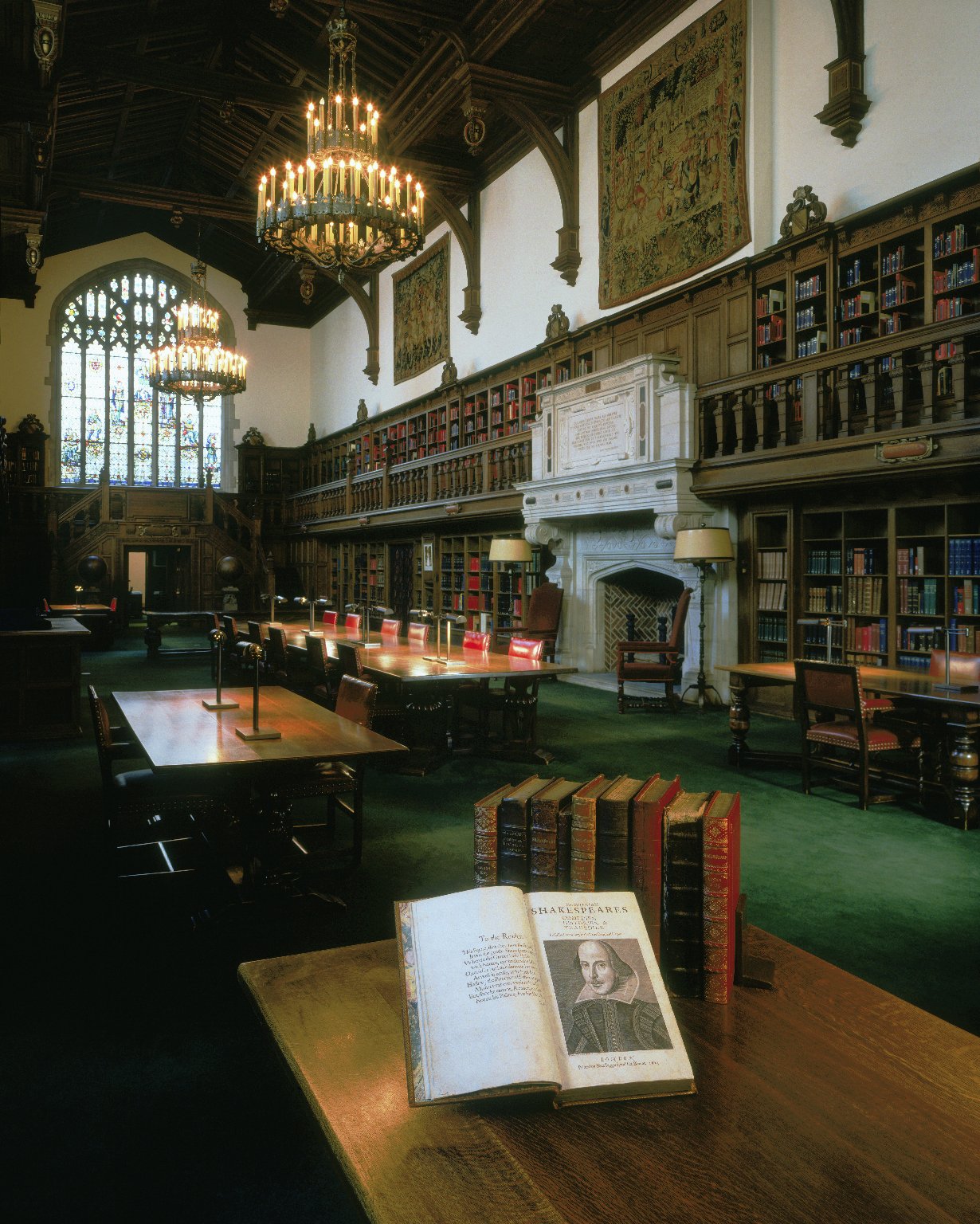
The Folger Shakespeare Library:
from the outside, it looks like an Italian Fascist masterpiece, ha ha.
Well, that is not exactly true…I traveled to the Thomas Fisher Rare Books Library at the University of Toronto while working on my MA thesis on Margaret Atwood. That, however, was eight years ago, and did not involve getting a reader card—or tea and cookies at 3pm every day!

In any case, it has been a long time since I traveled to a library or archive to do specialized research, and my experience at the Folger was extremely positive. Of course, there are always various discomforts that attend such research: uncomfortable chairs and tables too high for typing comfortably on a laptop; only using pencils; freezer-level A/C, etc. On the other hand, the Folger has many aspects specific to itself that made it a particularly pleasant scholarly experience. 

As mentioned before, the Folger readers and staff have the option of tea, coffee and cookies at 3pm every day. Most folks go to the afternoon tea break, and it’s a wonderful opportunity for meeting the other readers at the library. You never know who you will run into! I had the pleasure of meeting, among many others, Jack Lynch from Rutgers, whom I already follow on Twitter but had never had the opportunity of meeting in person, as well as Lara Dodds, from Mississippi State and on whose roundtable I will be speaking at the MLA in January! It’s a small world in academia, as usual.

The beautiful reading room.
Aside from tea and cookies, the Folger reader room is beautiful and inspiring. Part of it looks like the library of an Elizabethan gentleman, complete with lots of dark wood, shelves of hardbound books, and leather-and-wood chairs that look like they are right out of a museum. There are busts of Shakespeare, stained-glass windows, and decorative motifs that would not look out of place in a Gothic church.

The librarians are very helpful, and although the website says that it can take up to 90 minutes to fetch rare materials, I never had to wait more than a half hour. I suppose it helps that I was there in summer and not during the school year. Still, I found the library fairly easy to use, quiet, and pleasant to work in.


My research itself was interesting, too, although I didn’t know how much useful information I would find. Doing archival research is very much a situation in which you don’t know what you might find or how useful it might be. For now, I think I’ve gotten what I need for my book project, but it’s comforting to know that I can return to the Folger whenever I’m in town again and take another look.
Going to the Folger is a great excuse to visit one of my favorite cities!

Tuesday, June 16, 2015

Other People's Lives: The Diaries of Elizabeth Inchbald

"The Muse" herself
I spent last week in the Folger Shakespeare Library’s reading room, doing some research on eighteenth-century actress/playwright/novelist Elizabeth Inchbald, known to her friends as “The Muse.”

Although I discussed her first novel A Simple Story in my dissertation, I had not done a lot of biographical research on Inchbald herself, so my trip to the Folger was enlightening. The Folger holds nearly all of Inchbald’s papers, including her pocketbook diaries, letters, and the many volumes of plays that she wrote remarks for, which established her as one of the first, if not the first female theater critic.

Lucky for me, all of Inchbald’s diaries have been transcribed by Ben P. Roberson and were published by Pickering and Chatto in 2007. I say that is lucky, because Inchbald’s handwriting is atrocious and her diaries were actually just datebooks that she used to keep track of expenditures and write down cryptic notes for herself.

A typical entry reads like this one from Monday, 3 June 1780:

My Cousin here Packing my great Box, she dined and drank tea with me and went with me to the House_Playd in Beggars opera at the hay Market. came home before the Pantomine with Mr. and Mrs. Edwin_Looked beautifully_Mr. Colman told me of some parts_was very happy.

One of her pocketbook diaries.
Photo by Ula Klein courtesy of
the Folger Shakespeare Library.
All of these notes would be squeezed into a tiny box approximately an inch high and three inches wide (see below). Although I used the printed version of her diary for my research, I did get my hands on the actual diaries while I was at the Folger. I’m glad I did, too, because the printed version doesn’t quite give you an idea of what these little pocketbooks looked like (<<<).

In the introduction to the diary, Roberson explains that Inchbald’s handwriting was quite messy, she often diluted her ink to save money, and she was indifferent to issues of capitalization and punctuation. It’s one thing to read those facts, and quite another to page (carefully!) through the diary yourself and admire Inchbald’s cramped handwriting and the life it reflects (and to reflect on the monumental achievement of Roberson as the transcriber of these diaries!).
A small fragment of the diary where Inchbald mentions her role as Bellario in the play Philaster.
It was the first role she played in London, and it was a travesty role (she was dressed "en homme").
Photo by Ula Klein by courtesy of the Folger Shakespeare Library.
Although I try not to treat the objects left behind by historical persons like saints' relics, it’s hard not to feel a thrill when you hold in your hands the little diary, 200+ years old, that this women from the past used to record her thoughts, feelings, meetings and even the weather. There is something fascinating about seeing how fastidious Inchbald was about recording the weather: “a fine day”; “a Wetesh day”; “a fine but Windy day,” etc. Nearly every day has a record of the weather.

Similarly, nearly every day has a record of how she felt (whether well or poorly or ill) and what she played or saw at the theater that day. Her journal is not just useful for those who would like to study her and her life; it is a brilliant, if undetailed, record of the London theater world of the late eighteenth century.

Of course, the diary is also a wonderful testament to Inchbald’s perseverance as a playwright and writer. The diaries from 1780 and 1781 often include mentions of her writing or working on specific plays. Unfortunately the diary from 1791, the year that A Simple Story was published, does not exist—or at least we don’t have it in a library. It was, however, fascinating to see her mention working on the first half of the novel in the fall of 1780.

I also quite enjoyed the fact that, it seems, it took Inchbald a decade to get through Richardson’s Clarissa(!). She mentions Sunday, March 19, 1780 that she “Read some of Clarissa Harlow in Bed.” It is not until Saturday, June 15, 1793, however, that she records in her diary, “finished reading Clarissa Harlowe.” 

Somehow, that is heartening. 

Monday, April 27, 2015

Do Not Go Gently: Oroonoko, Race, and the Problem of Violence

“Caesar [Oroonoko] made an harangue to ‘em [the slaves] of the miseries and ignominies of slavery, counting up all their toils and sufferings, under such loads, burdens, and drudgeries as were fitter for beasts than men...”

“…they [the white men] all concluded that…Caesar [Oroonoko] ought to be made an example to all the Negroes, to fright ‘em from daring to threaten their betters, their lords and masters; and at this rate no man was safe from his own slaves…”
Aphra Behn, Oroonoko (1688)

Three hundred and twenty-seven years after the publication of Aphra Behn’s Oroonoko, we are still debating race, racially-motivated violence, and the question of how much suffering any person or people can put up with until they reach a breaking point. All over the United States, in the last year, we have been seeing the breaking point reached and the social order breached. Many shake their heads in anger, frustration, or dismay, that the peaceful protests against police brutality of African Americans have turned to violence, riot, and looting. And yet, no doubt many of the same people would agree that slave revolts in the New World were justified reactions to slavery.
            I do not wish to oversimplify the case, however, or to somehow overstate Behn’s prescience
Riot fires burn in Baltimore.
or her novella’s ability to comment on our situation today, all over the US and most especially, lately, in Baltimore, in my home state of Maryland. And yet, it seems that the old adage holds true: all roads lead to Rome. I had planned to write about Oroonoko this month because I was teaching it again, after a couple years’ break. It just happens that the night I sit down to write, the riot fires are lit, and Behn’s words seem more applicable than ever: white heteropatriarchy still insists that we must make examples of rebellious black men, lest the slave owners be threatened by their own slaves.
            What struck me the most, re-reading Oroonoko;, or, The Royal Slave, this time around (my fourth time, at least, possibly my fifth) was the violence that permeates the text. From the gruesome arrow-in-eyeball that puts Oroonoko next in the line of succession, to Oroonoko’s final, brutal burning and dismemberment, Oroonoko is a violent text. The violence is not limited to any one kind of person or people—the Africans, the Europeans, and even some of the Indian groups described by Behn’s narrator all perpetrate horrific acts of violence. And the recipients of violence are not just men and women: the victims of violence include the animals of the jungle as well.
            Behn’s text served an important role in the early abolitionist cause, and in the past, I read her depictions of violence as shock tactics applied for the purposes of garnering sympathy for Oroonoko, Imoinda, and the other slaves who “toi[l] on all the tedious week till Black Friday; and then, whether they worked or not, whether they were faulty or meriting, they promiscuously, the innocent with the guilty, suffered the infamous whip, the sordid stripes, from their fellow slaves, till their blood trickled from all parts of their body.” The body is a fragile, permeable, extremely vulnerable entity in Oroonoko, subject to both physical and mental anguish. Even when Oroonoko takes matters into his own hands and kills his precious Imoinda, his body then fails him: he cannot get up and wreak his planned revenge on the whites. Instead, he languishes by her body, unable to move or leave.
            The natives of Surinam, however, are not all gentle and sweet, either. There are those who are described as taking part in brutal, gruesome self-mutilation for the purposes of displaying their grit and courage. Upon seeing these mutilated men, these “hobgoblins,” the narrator, Oroonoko and the others learn that these men have competed in the past for the glory of leading armies into battle: “they are asked what they dare do to show they are worthy to lead an army. When he who is first asked, making no reply, cuts off his nose and throws it contemptibly on the ground; and the other does something to himself that he thinks surpasses him, and perhaps deprives himself of lips and an eye; so they slash on till one gives out, and many have died in this debate.”
            Later, Oroonoko himself shows his contempt for the white men by “cut[ting] a piece of flesh
Behn's gruesome descriptions were
no exaggeration.
from his own throat, and thr[owing] it at ‘em…At that, he ripped up his own belly, and took his bowels and pulled ‘em out.” Incredibly, Oroonoko survives this self-harm, is taken back to the plantation, is healed, only to be burnt alive while simultaneously being dismembered by the evil whites of the plantation. The metaphorical resonances of this brutality—that white men would patch up self-destructive, rebellious black men just so they can kill them even more brutally at their own leisure—suggest the inequalities built into our own system of socioeconomic oppression and injustice.
            Oroonoko asks us to consider some weighty questions, including those relating to class as well as race. Do we empathize more strongly with Oroonoko because he is a “royal” slave, a beautiful, noble prince, while his jailers are former convicts, sent to the colonies for lack of a better place to put them? Similarly, do we castigate looters and rioters merely for their actions, or for the race and/or class they appear to represent?
            Beyond questions of race, though, Oroonoko seems to suggest or possibly even critique the inevitability and the brutality of violence. The only persons who do not perpetrate violence actively are the women of the text: Imoinda saves herself from the King’s rage by claiming that Oroonoko took her by violence and in the end he kills her (though she does help convince him to do it) while the narrator and the other women of the colony are routinely pushed out of the scene of action so that violence between men can take place. Is violence, then, a masculine trait? Do the women participate in the violence if they only do it passively?
            Finally, there is the question of brutality and civilization. There appears to be no difference in the level of savagery perpetrated by the different groups—African, European, South American—though there are some allusions to noble or honorable violence. The differences between honorable and dishonorable violence are elusive at best in Oroonoko. Instead, we are confronted with the long history of human brutality—the brutality that Oroonoko accuses his fellow slaves of falling into by refusing to rebel against the iniquities perpetrated against them. Oroonoko calls his fellow-slaves “insensible asses” who have “lost the divine quality of men.” The line between civilization and savagery, the rational and the irrational, and the orderly and the brutal is hazy and uncertain, subject to interpretation.
            At one point, Oroonoko manages to kill a tiger that had killed many “lambs and pigs.” Oroonoko manages to shoot the tiger in the eye, “but when the heart of this courageous animal was taken out, there were seven bullets of lead in it, and the wounds seamed up with great scars.” The tiger (a cougar or puma) is brutal, yet it kills for food; others had attempted to kill it, and it had survived. Eventually, though, it’s too much: Oroonoko’s arrow finally does her in. Is it mere irony that Oroonoko is the one to kill this vicious yet noble beast of the forest?  Or are they both to be understood as noble victims of forces larger and more powerful than any individual? Despite the narrator’s suggestion that many in the area believed the tiger to be a “devil” rather than a “mortal thing,” the tiger’s violence cannot be understood as purposefully malicious. It kills to survive.

            And perhaps that is the crux of the whole thing: when is violence justified? When it is the only means left by which to survive.

Sunday, March 29, 2015

City of Angels: Reflections on ASECS 2015

A week ago I had just gotten back from LA and the annual meeting of the American Society for Eighteenth-Century Studies (ASECS). Last year’s meeting was in Williamsburg, Virginia, so it’s a bit hard to beat, from a historical perspective, though Los Angeles has its own charms, including delicious ethnic food, glittering sky scrapers, funky bookstores, and lots of big city glamour.
The famous/infamous Westin Bonaventure hotel.
Of course, I don’t really go to ASECS meetings for the glamour—unless you count the fashion styles of some of our most prominent scholars as “glamour,” which I do. President Kathleen Wilson gave her presidential address wearing a canary-yellow confection that would not have been out of place in Megan Draper’s closet on Mad Men, while John Richetti and Srinivas Aravamudan duked it out sartorially for the title of best-dressed dandy. I’m still deciding whether pink socks (John) trumps polka dot scarf and pork pie hat (Srinivas).

Scholarly fashion aside, this year’s conference was another personal success—and not just because I both presented a paper and chaired a roundtable, thought that was part of it. It was my fifth time at the annual meeting, which meant that there were ever more familiar names and faces to reconnect with, many wonderful folks from Twitter to finally meet in person, and an even greater sense of scholarly community to experience. Being the lone eighteenth-centuryist in my department in Texas, I enjoyed being surrounded by eighteenth-centuryists, even if I don’t always see eye-to-eye with them all.

My first ASECS was the meeting in Vancouver, and I still remember how wonderful it felt to share the first forays into my dissertation project with other people and get positive feedback. Last week, it still felt good to get positive feedback on the paper I gave and later on the roundtable I had assembled and chaired. Validation is an important part of the conference experience: our task is often a lonely one, and we need conversation and external validation in order to keep us going.

At the same time, conferencing also opens our eyes or, less dramatically, simply reminds us that there are people working in the same time period and perhaps even on related projects whose approach is diametrically opposed to our own. If you are like me, and you try to go to a couple of panels every day, then you are likely to hear papers that seem boring, irrelevant, or even wrong to your personal point of view and methodology. Those moments are difficult because they remind us that our own methods and objects of study are not the only ones out there; we are part of a larger constellation of projects and questions and areas of study that thrives on difference, not sameness.

Aside from the more esoteric side of conferencing, there is also a very pragmatic side. We come to conferences to meet people, not just ideas. I was fortunate enough to take advantage of the “Speed Mentoring” offered at this year’s conference, and there I met Kirsten Saxton, who, in about half an hour, listened to my questions, gave me great advice, and made me feel more confident about the next step in my career. I thus began my conferencing at ASECS with the sense of the humanness of conferences. I also ended it that way when I attended the Women’s Caucus annual luncheon on Saturday.

At the luncheon, in addition to getting to reconnect with my outside reader and wonderful mentor Kristina Straub, I simply basked in the sense of being surrounded by intelligent, capable, friendly, scholarly women, whose presence reminded me of how central women’s and gender studies is to my work and my sense of myself as a literary scholar.

My web of connections had some extra sparkle this year because of the presence of several people from my doctoral institution, Stony Brook University, including President Kathleen Wilson. Kathleen has always been a wonderful scholar, but many people might not also know that she is an incredibly generous friend, mentor, and colleague.

Before I get too gushy though, I will finish up my reflections on some of the panels I attended—and I tried to attend as many as my travel-addled brain could handle. Thursday I presented on the “Queer Richardson” panel, and it was an excellent set of papers, if I do say so myself. I spent the afternoon volunteering at the Women’s Caucus book sale table, which meant getting to chat with various attendees to who stopped by to take a look at the books for sale, including other SBU Alums, Devoney Looser and Jenny Frangos.

On Friday, I attended a panel on the role of missionaries in cultural and political developments, mostly because a colleague from my home department was presenting. I ended up learning a lot on a topic that I didn’t know much about, something I always appreciate. Kathleen’s presidential address on producing Sheridan’s plays in colonial milieus was fascinating, and I followed it up with the transgender studies in the eighteenth-century panel. Chris Roulston’s paper on Anne Lister was tender, reflective, and inspiring.

Saturday I took the morning off to catch up with some friends; after the Women’s Caucus luncheon I attended one more session: a workshop run through the “Re-Enlightenment Labs” project (Cliff Siskin and William Warner) which was interesting in part because it was a workshop, not a panel or roundtable. Between this “lab” and earlier discussions at our table at the luncheon, I’ve started thinking about how we might shake up the “usual” modes of conferencing. Even if the topic of the “lab” was not something I would have chosen myself, I found the idea of having a discussion (rather than just listening to others read papers) fascinating and refreshing.

I finished out Saturday in LA with a trip to The Last Bookstore and a delicious tapas dinner with some amazing people. I strolled over to the Walt Disney Concert hall, shopped for Andy Warhol postcards at the MOCA shop, and tried to ignore the urine stench in Pershing Square. It seems that the seedier side of downtown LA is still there, just a few blocks away from the sleek shine of the Westin Bonaventure and the stately hush of the LA public library.

Although conferencing is a heady mixture of inspiration, exhilaration, exhaustion and, at times, disappointment, it always leaves me reinvigorated in the end. I return to my own little patterns and habits, but my thoughts trace new paths and my research takes on new meaning.

Walt Disney Concert Hall.
I had to do a little sight-seeing at least!


Friday, February 20, 2015

Cinderella Meets the Byronic Hero

Although I’ve blogged here before about 50 Shadesof Grey, and I recently blogged here about the persistence of the Cinderella myth, I’m going to bring it all up again. The much-anticipated 50 Shades film recently came out, just in time for that most horrifying of holidays, Valentine’s Day, and many of us literary folk have been scratching our heads as to why, exactly, a poorly-written, poorly-plotted, sex-negative “mommy-porn” has made so much money and appealed to so many women.

Mad, bad & sexy!
Lord Byron
To me, the reasoning is fairly simple, though I will caveat my argument with the fact that I have read the books, but I have not yet seen the movie. Going by the books, however, it seems pretty obvious that 50 Shades combines two (possibly three) very powerful cultural myths: that of the rags-to-riches story (cue Cinderella) and the rake-reformed (cue the Byronic hero).

Although 50 Shades began as a Twilight fan fic, it owes almost as much to Pretty Woman as it does to its vampire progenitor. Pretty Woman is obviously a reworking of the Cinderella story, but if we look closely, we can see that it is also a story about bringing a sardonic, isolated, and brooding billionaire back to life—just like 50 Shades of Grey.

The Byronic hero or antihero (your choice) has his own gravitational pull. He is mysterious, alluring, charming, brooding, prone to outbursts, and intellectually superior to those who surround him. He is doing penance for an unknown past sin, suggesting emotional vulnerability obscured by a carapace of irony and self-loathing. He is cocky, self-assured, highly intelligent and, of course, wildly attractive, handsome, sexy, etc.

It’s hard to find a television drama these days without a version of our beloved Byronic hero—named after Romantic poet Lord Byron who was described by a contemporary as “mad, bad, and dangerous to know.” The archetype of the Byronic hero draws on both Byron’s personality as well as on his works—such as the character Manfred in the closet drama of the same name. Other Romantic and Gothic texts took up the rough outlines of the Byronic hero and helped build up his allure.

Victor Frankenstein, Heathcliff, Mr. Rochester, Sherlock Holmes and Eugene Onegin are some nineteenth-century examples that contributed to the growth of interest in this type of hero. Today, the obsession continues with various Sherlock Holmes movies and shows (Elementary and Sherlock), Dr. House, the entire Batman franchise, Edward Cullen and now Christian Grey.

Michael Fassbender as Mr. Rochester.
He's so tormented! Don't you just want to make him a sandwich?
The idea that a woman could “fix” the bad boy Byronic hero and open his heart to love has been around a long time as well. In some cases, our heroines succeed (Jane marries Mr. Rochester, though only after becoming financially independent); in others, they don’t even bother trying (Cathy is her own kind of Byronic heroine in Wuthering Heights, one could argue).

One of the most alluring conceits in the 50 Shades of Grey series is, no doubt, that Anastasia Steele succeeds in reforming her rake and, even more potently, that it is her innocence, purity, and tenderness that tame the beast (cue the Beauty and the Beast myth). While outwardly the novels appear to be about Christian’s dominance over Ana (and many feminists have castigated the work for supposedly glorifying stalker-like, abusive behavior in romantic relationships), at the heart of the appeal of 50 Shades of Grey is the powerful notion that this young woman is the only person powerful enough and special enough to reform Christian and his sexual deviance.

One of the earliest press release photos
underscores the difference between Ana
and Christian: college student and
sexy billionaire.
Ana is so morally and emotionally pure, that not only is she a virgin before she meets Christian, but she refuses many of his monetary gifts. She doesn’t want him for his money—though ultimately his money is the other crucial part of the powerful fantasy and appeal of E.L. James’s novels. Christian is so wealthy, that Ana’s money problems are solved forever once they get together. His wealth means most people are at his command—but not Ana. Though she agrees (sporadically) to be his submissive in the bedroom, she is constantly challenging him. Although she is physically weaker, younger, and financially insolvent in comparison with her lover, it is actually Ana (the woman) in the relationship who wields the real (emotional) power—and who “wins” at the end of the novel. Winning here means helped Christian leave behind the world of BDSM (mostly, anyway) in exchange for domestic bliss (and “vanilla sex”).

That is a powerful fantasy. And that, to me, is why these books are so addictive. It’s not just the sex. And it’s not because all these women are yearning to be in abusive relationships. It’s because these novels draw on culturally-embedded myths: Beauty and the Beast, Cinderella, the Byronic Hero. Further, they take these myths and rework them into a female fantasy in which empowerment is only necessary insofar as you are able to change your sexy, brooding Byronic hero into a sexy, no-longer-brooding billionaire husband and baby-daddy. Thematically, thus, 50 Shades of Grey is not so different than Pamela or Jane Eyre.


No doubt poor Charlotte Brontë is spinning in her grave!

Now, don't misunderstand me...there is plenty that is problematic, to say the least, about these novels and the spin-offs they have engendered. But it seems worthwhile to look at them in the context of archetypes and cultural myths, for they reveal the persistence of certain ideas in our culture. Further, literature has always been a place in which to explore (and create) fantasies in a safe place. Eighteenth-century fictions presented their readers with heroines in sticky situations, often for the purposes of entertainment--not always for moral instruction. 

We can read Eliza Haywood's Fantomina, for example, as a text about a deeply misguided young woman brought to the brink of obsession by a man. Or, we can read her as a conniving, powerful young woman in control of her sexuality. Both Fantomina and 50 Shades illustrate certain persistent inequalities in our society without making a definitive judgment about these inequalities.

This is not to suggest that 50 Shades is important in any "literary" way. It's poorly written with ridiculous dialogue and flat characterizations. It's erotica, and by definition erotica is repetitive--there's only so many ways to go about that particular business. But the very popularity of 50 Shades and its protagonists is what makes them so interesting to consider.

Wednesday, February 4, 2015

What’s In a Name?: Periodicity and How We Study Literature

One of the panels for next year’s MLA Convention considers the relevance and repercussions of naming the time period that we study, specifically the eighteenth century:

Naming the 18th Century
Special Session
What's at stake in naming this period "long" (1660-1830), "short" (1715-1789), early modern, Enlightenment (etc.)? What's its role in the new MLA? 300-word abstracts by 15 March 2015; Dustin D. Stewart (dustin.d.stewart@gmail.com) and Joshua Swidzinski (js3683@columbia.edu).

Literary studies logic:
Start with the old stuff.
It is an interesting question, one that many scholars side-step in their research. This issue is not specific to eighteenth-century literary scholars and historians, though that is the time period I am most familiar with. Overall, the study of literature in English is overwhelmingly still dominated by geographical and chronological divisions: American Literature is separate from English Literature; both of which are at times excluded in courses dedicated to Global Literatures in English. Similarly, most doctoral programs still emphasize periodicity through the demand that potential scholars declare which time period is “theirs.” Oral examinations and dissertation projects are similarly expected to be tied to specific time periods in preparation for the job market (or what’s left of it), in which many scholars still hope to be hired for a time period-specific job.

The idea of the period-specific scholar is both a new invention and an old one, and one could probably make a convincing argument for the continued importance of focusing on individual time periods versus becoming a “Generalist”—a designation that is increasingly popular on job postings yet remains suspiciously bland and non-rigorous in the minds of many scholars.

Anthologies suggest distinct time periods...but is that such a good idea?
Literary survey courses often present literature and literary history to students in a chronological order, neatly dividing (as the Norton splits often do) British literature into six distinct and orderly time periods of literary output: Medieval; Early Modern; Restoration and Eighteenth Century; Romanticism; Victorian; 20th Century and Beyond. But as we read, it is impossible not to note that there might be many different ways to consider British literature.

We could consider it via genre, theme, style, topic, or in even more arbitrary ways, such as alphabetically by the title of the work or author’s last name. Even with such an arbitrary organizational method, we could probably find a way of making sense of these juxtapositions. Consider a course on “B” literature, and the fascinating juxtapositions of Borges, Bulgakhov, Bronte and Balzac.

Of course, one of the most pressing reasons for reading works chronologically, aside from its seeming “logical” to go “in order,” is because in literary studies, authorial output is often influenced by what the author read him/herself—and those are, of necessity, works written earlier or concurrently with his/her own. The idea of being able to trace an author’s reading history and to find those influences in a work is a powerful and appealing one. Similarly, in our scholarship, we often imagine that by studying by time period, we may uncover changes in style, topic, and form that might otherwise escape our discerning eye. Scholarly claims often focus on making an argument for how a certain kind of reading shows us something about the time period it was written in or the ideas circulating at the time. Certainly this is evident eighteenth-century studies, where the eighteenth-century is the “first time” that we find an example of X; or Y trend in this time period indicates that such-and-such was changing in the eighteenth-century.

It's comforting to think of history as progress and improvement...
but that's not always the case.

Projects relating to the Enlightenment and Enlightenment personhood are also very of-the-moment. Various claims have been made for the eighteenth century, the long eighteenth century, the Enlightenment, the Neoclassic period, the Age of Johnson, the Age of Satire, late Early Modern period…the list could go on. We ponder why certain styles of poetry became popular while others receded; we theorize the rise of nationhood at this time; we make arguments as to the changing role of women, class divisions, sexuality, and race. But in many ways, these arguments seem constrained by our emphasis on the time period rather than liberated or enhanced by it.


Is the eighteenth century truly the Age of Satire?
Why not the 19th century?
Or the 20th century?
My own research focuses on the body, desire, and, more specifically, female cross-dressing. It’s hard to write about female cross-dressers of the eighteenth century and their representation in literature without running into various claims that such representations “reached a peak” in the eighteenth century or that the cross-dresser was “socially accepted” in the first half of the eighteenth century, only to become socially undesirable by the end of the century.

Such claims seem, at least to me, to construct a false history of the female cross-dresser and her role in British literature. To look at female cross-dressing only in eighteenth century literature is to ignore the role of cross-dressing in medieval and early modern England as well as its continuing role in nineteenth-century culture. Similarly, to look at female cross-dressing only in an English context or even an English-speaking context is to risk making claims about this phenomenon that are incomplete. Female cross-dressers were not limited to an English context, yet most scholars would find it difficult to find a way of writing about these representations in other cultures unless they were in a Comparative Literature program.

To bring up the issue of Comparative Literature means also having to consider literary studies in different languages. Literary studies in other language—Spanish or French or German, for example—may have other kinds of chronological divisions in their time periods. Periodicity is, after all, tied to certain time periods that have a distinctive relationship to the history of the country that they represent.

I don’t mean to sound as if I’m only throwing up roadblocks here. I love what I do and what I study; I love being an eighteenth-centuryist. I enjoy going to ASECS, learning about the eighteenth century, and spreading my love of it to everyone I know. At the same time, I try not to forget the limitations of my methods and thinking. It’s important for our students to know that no time period is homogenous and that our world is never just progressing forward; sometimes we’re marching backwards. The linear progression of history and creative output is an organizing fantasy, one that may need to be rethought as the modern university changes and one that we cannot, should not ignore in our own research.