Thursday, September 4, 2014

Queer Vision(s)

This year, I’ve proposed a roundtable for ASECS 2015 on “Queer Vision(s)”:

Eighteenth-century plays, novels, memoirs and even art and poetry are often concerned with what we know and how we know it. Vision plays a key role in defining and understanding knowledge in this period, especially with regard to knowledge of the gender and sexuality of eighteenth-century persons and characters. Consider the moment in which Fanny Hill looks through the peep hole and watches two young men engaging in a homosexual act only to fall over and faint before she can report them, or how actresses in breeches roles were admired and desired by both men and women for the spectacle they provided on stage. This roundtable solicits papers that will examine the various ways in which vision is queered in the eighteenth-century as well as how vision and the ability to see “queerly” affects who or what is understood to be “queer.”

In the spirit of shameless plugging, I’ve decided to dedicate a whole blog post to the topic in the hopes of promoting the roundtable. I’m hoping to get a really great discussion going at ASECS on the intersections of desire, perception and sexuality. These issues are, after all, deeply tied together.

My own research on female cross-dressers led me to the idea of “queer vision.” So often, the bodies of these women would give them away. A flash of boob, for example, and the jig was up—or was it? In Henry Fielding’s The Female Husband, Mary Hamilton’s breasts are exposed at a town dance—yet she retains her male disguise. According to Fielding’s narrator, the Doctor (Hamilton) enters into a dispute with a man at a local dance where she has been wooing her newest conquest, Mary Price. During the scuffle, the man “tore open her [Hamilton’s] wastecoat, and rent her shirt, so that all her breast was discovered, which, tho’ beyond expression beautiful in a woman, were of so different a kind from the bosom of a man, that the married women there set up a great titter” (46-47).

How Hamilton hides her superlatively perfect breasts in the guise of a man is left to the imagination of the reader. According to our narrator, “it did not bring the Doctor’s sex into an absolute suspicion, yet caused some whispers, which might have spoiled the match with a less innocent and less enamoured virgin” (47). It seems that Mary can only see what she wants to see; Fielding, by contrast, is coy as to what exactly he wants his readers to see: do we see Hamilton as a villain? a rake? a misguided criminal weirdo? a beautiful and attractive female husband?

The issue of perception and desire, however, is not limited to issues of cross-dressing or same-sex desires. These same issues play out in various ways on the eighteenth-century stage and in novels where concerns about disguise, class fluidity, “passing,” and masquerade show up again and again. For example, how could Clarissa not “see” Lovelace for what he was? Or could see it, but still desire him despite it?

It seems, perhaps, that despite innovations in visual technology, such as the microscope and the telescope, eighteenth-century writers were still quite concerned with how to see others, and how these various queer visions affect how others see us and whom we desire. The purpose of this roundtable will be to take a look at these issues from a variety of perspectives and through a variety of texts and artefacts. Artists as well as writers explored the notion of vision and desire in visual media such as paintings and cartoons. Other studies in material culture, such as costume studies, might also make some interesting interventions into this discussion.


For more info on submitting a proposal, go to the CFP. Paper proposals are due by Sept. 15, 2014.

For more on boobs, see my article on Maria Edgeworth's Belinda. 


Wednesday, August 6, 2014

Lovely Oddities: Lesser Known Novels of the 18C

As it often happens, I stumble upon many great links while on Twitter (@KleinUla) relating to my research as well as the greater topics that interest me: the eighteenth-century, clothing, material histories, medical anomalies, gender, sex, etc.

The most recent link which I simply had to share with my readers was from The Toast (the-toast.net):

What were 18th-century folk
reading when they weren't reading
Defoe, Burney or Richardson?
100 Actual Titles of Real Eighteenth-Century Novels

The website lists some of the more ludicrous, eyebrow-raising, confusing, and/or tantalizing lesser-known
(mostly unheard of!?)  eighteenth-century novels.

Since I'm always on the lookout for new texts to incorporate into my research, this list (and the sources of these titles, included at the bottom of the website) will undoubtedly lead me down many a blind alley--but hopefully also down some happy trails.

Atrocities of a Convent and The Nunnery for Coquettes sound like fun reading....but might also be worthwhile to read in conjunction with Diderot's more well-known convent expose, The Nun.

I will definitely have to check out The Polish Bandit; Or, Who is my bride? just to see if it really is about a Polish bandit. There needs to be more Polish in my research!

The Laughable Adventures of Charles and Lisette; or, The Beards piques my interest in, of course, beards--how could it not? I've posted here about beards not once, but twice!

Similarly, The Adventures of an Irish Smock, Interspersed with Whimsical Anecdotes of a Nankeen Pair of Breeches is must for me, given my interest in breeches and eighteenth-century clothing more generally. So too The Charms of Dandyism; Or, Living in Style. By Olivia Moreland, Chief of the Female Dandies has caught my attention for its intimation of female cross-dressing.

I'll let my lovely readers peruse the list at length, and I invite any and all of you to let me know if you've read any of these works or others like them (i.e. unknown but fascinating). Let me know if they're worth a look, where to find them, and what you thought of them.

Of course, lists like these beg the question: What did eighteenth-century readers read, when they weren't reading what we read from the eighteenth-century canon. Publication histories can be difficult to trace in this time period, as the marketplace was glutted with anonymous pamphlets or pamphlets or novels published under nom de plumes. The Victorian period suffers from the same problem; the amount of novels published in that time period far exceeds today's book publications, which means that there are far more novels to be read than those written by Dickens, the Brontes, Gaskell and other syllabus "stand-bys."

It stands to reason, then, that there might be excellent works of fiction out there, largely unread and waiting to be rediscovered, anthologized and popularized. While I doubt that The Freebooter of the Alps is one of them--who knows? Maybe it is. In any case, it might just be worth checking it out.

Saturday, July 26, 2014

50 Shades of a Woman of Pleasure

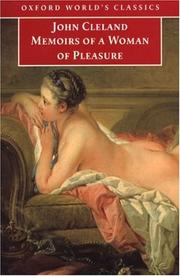
I know it’s not fair to compare 50 Shades of Grey to John Cleland’s Memoirs of a Woman or Pleasure; or, Fanny Hill. After all, in many ways, they are completely different; yet, as we shall see, there are some compelling reasons to consider them together.

50 Shades of Grey tells the story of a young woman finishing college who is first seduced by a sexy billionaire, only to turn the tables and become the one in charge. While the media made much of the novel’s S&M plot twists, in the end, it is really a novel about how the woman in the relationship, Anastasia Steele, “fixes” her gentle brute, Christian Grey, changing his sexual tastes from BDSM to “vanilla sex.” (That’s what the book calls it—I kid you not.) Additionally, the book initially began as a Twilight fan fic, was written by a woman for other women, and, of course, is a product of 21st-century America.

Fanny Hill, by contrast, tells the story of a young woman who falls in with the wrong crowd but eventually comes into her own (pun intended). Initially, she is picked up by a madam in the hopes that her virginity will fetch the right price; while Fanny is shocked at this idea at first, she comes around (again, pun intended) and learns to love and enjoy sex with men (sex with women being a far inferior proposition—of course, 50 Shades of Grey never even glances in that direction…). Fanny has many different partners over the course of the novel, has sex for money, engages in orgies, and has no career ambitions aside from being the loving and repentant wife of her first sexual partner, Charles, from whom she is parted for most of the novel. The novel was written by a man for other men, in the middle of the eighteenth century, in England.


What with the film version of 50 Shades coming out just in time for next Valentine’s Day and the official trailer finally out, however, I couldn’t help comparing them. Both novels are by far the most influential erotic tales of their own time, and both are written in the voice of a young woman who is entering the adult world for the first time. No matter that Fanny is a teenager while Anastasia is about to finish college; the difference in age is a minor fact. Additionally of note is the tone that the two works use: both works insist on a fairly romantic view of sex and sexual encounters, eschewing words like “penis” or “fucking.” While E.L. James resorts to a kind of bodily synecdoche to describe sex, as in “he entered me,” Cleland makes use of a variety of colorful metaphors for the male member, including but not limited to “weapon of pleasure,” “the engine of love-assaults,” “truncheon,”, “may-pole,” “pick-lock,” “delicious stretcher,” “superb piece of furniture,” and “pleasure-pivot.”

Both authors are also quite adamant that S&M is a lesser pleasure compared to conventional sex between a male and female partner. When asked to flagellate a man who gets off that way, Fanny acquiesces but is puzzled by the pleasure the man gets from this act. While BDSM plays a much larger role in 50 Shades, the novel’s protagonist Anastasia has a similar aversion to such activities.
 
Fanny and the flagellant, Mr. Barville.
Lastly, both novels ultimately champion a single bond between two (heterosexual) people who marry, in the end, and live a rather conventional lifestyle—an interesting ending for works so committed to titillating their audiences. In many ways, however, as a reader, I find Fanny Hill a more stimulating, entertaining, and interesting read than 50 Shades.

Much has been written already about the many different ways we can read Fanny Hill. Fanny enjoys the attentions of Phoebe Ayres, even as she rejects them for not being “substantial” enough. At the same time, she outright rejects sex between two men as immoral. She has no problem, though, participating in orgies and watching others participate in them. She is both a participant and a voyeur, and the voyeuristic qualities of the novel’s heroine, as well as her evident pleasure in recounting her past escapades (which she is meant to be confessing to an unnamed woman….yet another literary question mark) suggest that there are many pleasures to be found in the novel. Even though the novel ultimately resolves Fanny’s problems through conventional means—marriage to the man she first had sex with—there are plenty of different ways to read and interpret Cleland’s pornotopia.

50 Shades of Grey is not exactly simplistic, by comparison, but its single-minded focus on “fixing” Christian Grey and Anastasia’s reluctant dabbling in his BDSM fantasies are both grating and, frankly, not very pleasurable. The novel takes the point of view that Christian wants to dominate his female “subs” only because he was physically abused as a child. Such a point of view is, of course, incorrect. Many mentally- and emotionally-healthy people engage in various types of BDSM-play in their sexual lives, and there is nothing inherently unhealthy about such fantasy play. Of course, the fact that Anastasia cannot “escape” her attraction to Christian and Christian’s attraction to her is yet another problematic aspect of the novel lifted directly from the Twilight series: the male must protect his female object of desire through what basically amounts to stalking even though it is precisely their relationship that puts the woman in danger in the first place.

This online cartoon pokes holes
in the Edward-Bella romance.
It seems almost as if modern women’s sexual and romantic fantasies are predicated on this trope of danger and protection 50 Shades and Twilight and heaven knows how many other romance novels propagate. While Fanny Hill is light-years away from being a feminist erotic novel, its heroine is able to survive because of her quick learning abilities. Fanny learns from Phoebe and the madams how to survive on the streets of London with nothing but her brains and her body to see her through. Like Moll Flanders and Roxana, Fanny is able to squirrel away money for later use. Like Pamela, an unlikely but obvious prototype for Cleland’s heroine, Fanny finally gets what she wants—stability, money and marriage for love—while having a whole hell of a lot more fun than Samuel Richardson’s too-good-to-be-true protagonist.

This is not to say that the eighteenth-century didn’t have its share of dangerous but seductive rakes—cue Richardson’s Lovelace. Or Jane Austen’s George Wickham. The difference is that in the end, Clarissa would rather die than be with Lovelace and Lizzy Bennet lets her dumb sister Lydia fall for the rake.  She doesn’t try to “fix” him; she throws him over and marries the more sensible (and moneyed) option, Mr. Darcy. Our 20th and 21st century fantasy, according to money-makers like Pretty Woman and 50 Shades of Grey, is a Byronic hero with money to burn who just needs a woman’s touch to be the ideal Prince Charming. Oddly enough, though Fanny loves her Charles, he isn’t Prince Charming—he’s hardly in the book at all. Instead, Fanny holds first place in her story as the main actor who controls her destiny.


Am I too biased, being an eighteenth-centuryist? Perhaps. But since there’s still another month of summer left, I suggest you read these books and decide for yourself. After all, they are practically the definition of summer reading.

Beach reading!
...though then again, you might not want to read these books in public...

Wednesday, July 2, 2014

Cross-Dressing Ladies: Maria Edgeworth’s Harriet Freke

Frontispiece to a 19th century
edition of Belinda.
Maria Edgeworth’s Belinda is by far one of my favorite eighteenth-century novels—though, admittedly, it is technically not an eighteenth-century novel at all. The first publishing was in 1801, and subsequent edits and publication dates lead Belinda even further into the early decades of the nineteenth century. It is undeniable, however, that Belinda, in topic, approach and tone is very much an eighteenth-century novel.

 Belinda is a complex work that starts out, seemingly, quite conventionally. The novel purports to tell the story of Belinda, a young lady searching for a suitable suitor. Her aunt has attached her to the fashionable Lady Delacour in London, in the hopes that through this connection, Belinda will meet the perfect suitor. Very quickly, however, the reader cannot but admit that Lady Delacour is, in many ways, much more interesting than the eponymous heroine of the novel. Lady Delacour is magnetic, beautiful and witty—and she has a fascinating back story about how she received a mysterious wound on her breast. It happened, in fact, when she was out in men’s clothes, about to duel with another woman with pistols. For more on Lady Delacour’s breast and her bosom friendships, look here.

The brains behind this whole ordeal turns out to be none other than Lady Delacour’s former bosom friend Harriet Freke, who regularly cross-dresses and enjoys playing tricks on just about everyone. Mrs. Freke, whose own name pronounces her strange proclivities, has “bold masculine arms” with “no conscience, so she was always at ease; and never more so than in male attire, which she had been told became her particularly. She supported the character of a young rake with such spirit and truth, that … no common conjurer could have discovered anything feminine about her.”

At one point in Lady Delacour’s reminiscences, she recounts how a young man jumped into a  coach with her. After the initial shock, she recognizes the young man’s laughter and realizes that this “young man” is in fact her friend Mrs. Freke. Mrs. Freke then recounts merrily of the day’s adventures: “‘Where do you think I’ve been?’ said Harriet, ‘in the gallery of the House of Commons; almost squeezed to death these four hours; but I swore I’d hear Sheridan’s speech to night, and I did…Fun and Freke for ever, huzza!”’

Lady Delacour’s eventual betrayal at the hands of her “bosom friend” Mrs. Freke, as well as the latter’s joy in causing her—and nearly everyone else—pain, casts her as the main antagonist in the novel. She plays tricks on Juba, the black servant of Mr. Vincent (one of Belinda’s suitors), as well as on Lady Delacour, leading the latter to believe that she is haunted. Additionally, Mrs. Freke attempts to turn Belinda against her friend; when this fails, she turns her attention to another young lady, a Miss Moreton, whose reputation is spoiled simply by keeping company with Mrs. Freke.

Towards the end of the novel, Mrs. Freke, in attempting to spy on Lady Delacour, is caught in a bear trap while “frolicking” in men’s clothing: “Mrs. Freke’s leg was much cut and bruised; and now that she was no longer supported by the hopes of revenge, she began to lament loudly and incessantly the injury that she had sustained. She impatiently inquired how long it was probably, that she should be confined by this accident; and she grew quite outrageous when it was hinted, that the beauty of her legs would be spoiled, and that she would never more be able to appear to advantage in man’s apparel.”

Maria Edgeworth
Harriet Freke is conventionally read as the antagonist who gets what she deserves, while Lady Delacour eventually repents of her worldly ways, reunites with her daughter and husband, and even manages to find a good husband for Belinda. Meanwhile, Mrs. Freke must give up her cross-dressing ways and find new ways of playing tricks on people. I’ve always found this reading of Belinda a bit reductive, however. Though Mrs. Freke is certainly not a positive character by any means, even Lady Delacour manages to feel pity for her when she is injured. Further, it is only the doctor’s opinion that Harriet Freke will not “appear to advantage” in men’s clothes after her injury.

The doctor’s opinion also glosses over the fact that cross-dressing allows Mrs. Freke much more than simply the option of “looking good” and exposing her legs. (For more on sexy lady legs, see my previous post on the topic.) Cross-dressing gives Mrs. Freke freedom, especially freedom of movement. Like Hannah Snell and other female soldiers, female pirates, and female husbands, cross-dressing allows Mrs. Freke to go where women usually dared not.


By making Mrs. Freke a cross-dresser, Edgeworth has complicated rather than condemned her character. After all, Lady Delacour cross-dresses in the novel as well—and so does Belinda’s lover, Clarence Hervey. Additionally, the novel is full of masquerades and even some mistaken identities. The marriage between Juba and the English farmer’s daughter (a subplot that was cut in subsequent printings) further suggests that the world is not just “black and white”; there are many shades of gray in between, not all of which are wholly evil or wholly good.

Tuesday, June 24, 2014

Job-Seekers: Prepping for the Fall Job Market in the Summer

In eighteenth-century novels, it seems that all a character needs to get a job is a good reputation and a personal recommendation—a letter from a lord, count, or other patriarch who will vouch for him or her. Unfortunately, today’s process of applying for jobs in academia is increasingly arcane, complex, and rife with opportunities for mistakes. The job market in the fall is fast and furious, with schools advertising as early as August 1st for the following year, followed by a steady trickle until the flood gates open on the MLA list on September 15th (at least in literary studies). Many schools have a November 1st deadline, but some have started to put out October 15th and even October 1st deadlines, so it is imperative that you start working on your documents over the summer.

Below is my guide to the key documents you will need for the fall market, keeping in mind that jobs advertised in the fall are mostly tenure-track positions (the spring and summer markets are much more mixed) and visiting assistant professor positions. My own experience is of the English lit job market, so that will define my slant on things. There are many other good sources out there, however, that cover similar ground and are worth checking out for additional help. See my list at the end of this post.

1.      CV: Every job you will apply for will ask for an academic CV. This is the one constant. I used Dr. Karen’s Rules of the Academic CV, so I highly recommend it. Some jobs will require you to fill out an online job application where you must list all the same information that is on your CV in addition to asking for a regular CV. Why is this? I can only surmise that it is because at some universities, HR departments screen all the candidates first before forwarding on their credentials to the search committee. The HR people use the website form & the committees look at the actual CV, so just be prepared for lots of redundancy. This is also a good reason to have the following on hand:
a.       A list of past & current jobs, plus titles, addresses of the main office, name of your supervisor and a phone number (good idea to contact past supervisors and let them know you’re listing them on applications!)
b.      A list of places you have lived in the past 10 years, including addresses (this has come up for me on several applications!)
c.       A list of the universities/colleges where you received your degrees, the credit hours logged for those degrees, the date of graduation
2.      Cover Letter: Another constant. Every job will require one. For the fall market, you don’t really need to worry about a teaching oriented letter; focus on the research letter (on letterhead if possible). Again, I’m going to direct you to Dr. Karen (aka “The Professor is In”) for her words of wisdom on how to avoid sounding like a graduate student in your letters. There are plenty of example academic letters floating around, so I am not going to belabor the minutiae of the letter. However, it is relevant to emphasize that you need to:
a.       use the word “dissertation” as infrequently as possible (unless you are still working on it & are ABD at time of application); focus instead on your book project or simply “the project”
b.      don’t talk about what you’re “going to” do; discuss everything in the past or present tense. Even if technically you haven’t started working on the book; choose phrases such as “this project explores….” rather than “I plan on exploring” or “this project will explore…” You want to sound like you are already a scholar rather than a student.
c.       don’t overly flatter the school you are applying to but do try to tailor your letter at least a little bit—especially if the ad mentions certain preferred qualities (interdisciplinarity, for example)
d.      create a “master template” letter—or 2 or 3. Look at last year’s job list and figure out which kinds of jobs you might apply to and then make your master template—a cover letter with the spots for the address of the school, the name of the chair & university, and anything else school-specific left empty. This way when you want to improve your letters mid-stream, you just update the template. When you apply to each school, you save it as a new file with the name of the school. This method will save you a lot of time!
3.      Teaching Philosophy or Statement of Teaching: Not all schools will ask for this, but enough will that it is worth your time to create one over the summer. This can be anywhere from 1 to 2 pages single-spaced, though some schools may be more specific about this requirement. Basically, the teaching statement should showcase the variety of courses you have taught, whatever methods you use that set you apart from other instructors, and specific examples of interesting things you have done in the classroom. The best case scenario for the teaching statement is that someone will read it and say, “Wow, I want to try that in my classroom, too!” You also need to emphasize how your teaching methods relate to your research methods. If you are a feminist scholar, then how does this methodology affect your teaching style? Avoid lists; focus on specific examples of classroom activities and try to include a key word or two that define your teaching style.
4.      Research Statement or Research Interests: While this is not frequently required, it might be a good exercise anyway to help you figure out your teaching philosophy and maybe even help you formulate parts of you cover letter. And of course some schools do require it. This is the place where you can discuss past, current and a little bit of future research. You can mention conference presentations, articles, and discuss the book project in more depth. If you are involved in larger research projects (like digitization projects) or if you have organized conferences, panels or writing groups with other scholars, this would also be the place to mention it. Again, avoid listing; try to sound put together by focusing on your key terms that define you as a researcher.
5.      Transcripts: Some schools will ask for official; most will ask for unofficial. It is important, however, to get this all figured out as soon as possible. A portfolio service like Interfolio will get official transcripts for you (for a price of course) and keep them on hand to send out whenever you need, so get the ball moving on that asap. Getting your unofficial transcripts and scanning them is also a good idea. Additionally, I recommend using PDF Merge to merge all your transcripts into 1 PDF for schools that desire them this way. If you just got your PhD, you may need to wait a bit for your doctoral degree to appear on your transcript. It can take up to 8 weeks after you actually graduate toyou’re your transcript updated, so keep an eye on it!
6.      Letters: DO NOT WAIT to ask your recommenders for letters of recommendation. Be aggressive; people will tell you they don’t have time over the summer, but don’t ask anyway. Some great school might have an October 1st deadline, and you don’t want to miss out because they want letters and yours aren’t ready. Start bugging your committee (nicely) for those letters over the summer; send them your cover letter, CV and whatever else they ask for. Don’t just focus on your committee, either. Get a teaching letter from someone you worked for who has seen you teach or get someone to observe you. Get a letter from an outside reader. Just don’t wait; and after asking, bug them every 2 weeks in the summer, and every week as the semester gets closer.
7.      Student Evaluations: Yes, some schools are going to ask you for student evaluations from courses you have taught. Get your hands on them, scan the best ones, get a variety if possible. Save them both separately and as a merged PDF. Then merge that with your teaching philosophy. Then merge that document with corresponding syllabuses. Have any many different versions of these documents on hand, because some schools will want a “teaching portfolio” while others will want just the evaluations. Still others will ask for “evidence of teaching excellence,” so you might want to send the whole thing—or maybe just the evaluations and syllabuses.
8.      Dissertation abstract: Many job applications don’t require this, but if you have some extra time at the end of the summer, it might not be a bad idea to whip one up. Again, try to minimize the word “dissertation” and focus on the main arguments and what you are contributing to the field with this project. Usually about 1.5-2pp. single-spaced.

Wow, long post today…well, this should give you an idea of how much work it is to be “on the market.” The more you can do over the summer, the happier you will be come September. Everyone is going to try to give you advice; my advice is take their advice for a while (with a grain of salt, as you will undoubtedly get conflicting advice), and then do what works for you.  Your letters and statements of teaching will no doubt change and get updated as time goes by, and so will your CV as you have more things to add to it. Having somewhere to start, however, will make everything much easier. Remember also to make time for proofreading and copy-editing. Any time you change the content of your documents, double-check that there are no typos or other editorial issues.

Here are some more resources. Good luck!

Dr. Karen’s Page on Academic Cover Letters


Brown University list of Job Market Resources

UCSD Academic Job Search Survival Handbook for Graduate Students


Tuesday, June 17, 2014

Leggy Ladies: 18C Attitudes Towards Legs

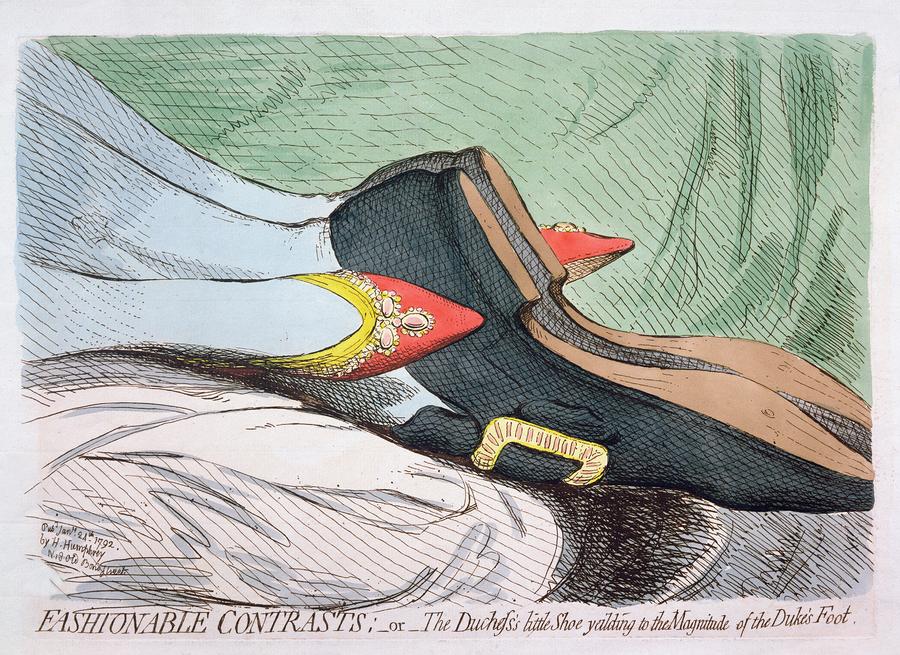
James Gillray's "Fashionable Contrasts" explicitly channels sex through legs & feet.
Gillray's cartoon depicts
ladies of questionable virtue
with their legs showing
from under their skirts.
Eighteenth-century dress, as most of us know, required women to wear long skirts, petticoats, and/or dresses to cover up as much of their legs as possible. A “short skirt” was one that revealed a lady’s ankle(!), and ladies who showed leg were considered titillating, inappropriate, or downright immoral. On the other hand, women who cross-dressed were often admired for their show of a “well-turned leg.” A quote from Bernard Mandeville describes this double-bind perfectly:

If a woman at a merrymaking dresses in Man’s clothes, it is reckon’d a Frolick amongst Friends…Upon the Stage it is done without Reproach, and the most Virtuous Ladies will dispense with it in an Actress, tho’ every Body has a full view of her Legs and Thighs, but if the same Woman, as soon as she has Petticoats on again, should show her Leg to a Man as high as her Knee, it would be a very immodest Action, and every body will call her impudent for it.
Peg Woffington, here as
"The Female Volunteer," was
often admired for her
luscious legs.

In fact, what made women’s legs so titillating was precisely the fact that they—and the crotch at the top of the legs—were hidden, invisible and unmentionable in normal dress. According to costume historian Ann Hollander, while men’s clothing tended to emphasize the body and “demonstrate the existence of a trunk, neck and head with hair, of movable legs, feet and arms, and sometimes genitals,” women’s clothes and particularly the skirt, which “hid women from the waist down and thus permitted endless scope for the mythology of the feminine, had become a sacred female fate and privilege, especially after it became firmly established as a separate garment.”

The separation of the legs seemed to allude, all too clearly, to the genitalia between them, making breeches on women an overtly sexual spectacle. Even actresses had to contend with the condemnation of eighteenth-century moralists on the topic of breeches parts and travesty, while all women were aware that the showing of legs was an immoral act often associated with prostitution.

Oh Henry!
Look at your
bulging...calves!
This is not to say, of course, that men’s legs were not sexualized in one way or another, either. Eighteenth-century texts and earlier Renaissance texts emphasize slim ankles and bulging calves as being the definition of a graceful gam in a gentleman. Henry VIII, for example, was revered for his muscular calves, a fact remarked on by the Venetian ambassador in 1515: “His majesty is the handsomest potentate I ever set eyes on…with an extremely fine calf to his leg.”

The difference between men’s and women’s legs seems mostly to be that an exposed male leg was accepted and expected in the eighteenth century, while the appearance of a feminine leg was, in most cases, not. Women who cross-dressed were seen as transgressors of gender codes, but, if they were attractive enough, then their leg exposure was also acceptable. All women who cross-dressed or even momentarily donned trousers to, for example, ride more comfortably on horseback (like the real Queen Caroline Mathilde who I wrote about last week!), were able to take advantage of the greater mobility that trousers afforded.
 
The trousers of female pirates Ann Bonny and Mary Reade in this engraving
suggest a level of comfort and mobility inaccessible to women in dresses and petticoats.

Thus, trousers were always, in a sense, a way for women to rebel, for they signaled independence, freedom, and increased mobility. This doesn’t mean that women in trousers weren’t sometimes co-opted by patriarchal projects designed to recruit men to the army, to arouse men sexually, or to put female bodies on display for consumption. Pants and legs are much more complex signifiers in the eighteenth century than just that; the images I include here as well as the remarks by Mandeville indicate the multifaceted, at times ambiguous nature of the female leg, and legs more generally, in eighteenth-century English society.

Isaac Cruikshank's cartoon satirizes the growing interest in ballet at the end
of the 18th century and its exposure of female legs...and other bits.


Monday, June 9, 2014

18C on Film: A Royal Affair (2012)

I finally got around to watching the Danish film A Royal Affair, which came out in 2012 and has been streaming on Netflix for a while. It tells the story of King Christian VII of Denmark, his English bride (Caroline Matilda, sister to George III, of England), her illicit affair with Christian’s personal physician Johann Struensee, as well as the struggle over bringing Enlightenment ideas to eighteenth-century Denmark.

The official English-language movie poster.
Knowing pretty much nothing about Denmark in the eighteenth century, I found the film fascinating from a cultural and historical perspective. After the film, I did a little online fact-checking, and, for the most part, the general outline of events as presented in the film is more or less accurate. The costumes, wigs, sets and props are very reminiscent of The Duchess, and, hence, gorgeous and historically-accurate. Though a little on the long side, the film keeps viewers’ attention through excellent performances by Swedish actress Alicia Vikander, who played the English & Danish-speaking Queen Caroline, and Danish actors Mikkel Følsgaard & Mads Mikkelsen who played the King and his cheating physician, respectively.
Just one of Queen Caroline's many many gorgeous gowns in the film.
In many ways, the film is typical of the type. It depicts an unhappy arranged marriage, a woman who must endure her husband’s attentions in bed until she is pregnant with an heir, and an illicit affair that, we know, can only end badly. Similar tropes abound in Sophia Coppola’s Marie Antoinette (2006) and the British film The Duchess (2008) to name just a few more recent examples.

What makes A Royal Affair different, aside from its being in Danish and set in Denmark, is the film’s perspective on the Enlightenment ideals that royal physician Streunsee and the Queen espoused and attempted to bring to Denmark. The conditions in the country, including abuse of peasants and serfdom, surface frequently in the film, and conversations between characters often reference the ideas of French philosophes such as Rousseau and Voltaire. The notion of personal freedom is explored in a larger context, going beyond just the implications for the upper classes, whose freedoms are examined in similar films.

The fight for personal and political freedoms becomes increasingly fraught in the film as the Queen and Struensee become entangled in a love affair while manipulating the King, whose unnamed mental illness renders him at times quite child-like, in order to implement new laws. The laws are ones that we recognize as the pillars of free society: banning censorship, banning torture, banning excessive work weeks for peasants. How can we not admire these laws? But the film depicts how Struensee, in his idealistic desire to implement these laws, ends up manipulating the King—his ostensible friend—in the same ways that the conservatives on the other side did previously.
The film makes it clear that eventually Struensee is just another courtier
waiting to manipulate the King.
Thus, the film refuses to demonize or idealize any of the characters completely while demonstrating the entrenched ideas of the times and the radical quality of notions that we in the Western world often take for granted. The film ends with the Queen’s loyal servant delivering her account of the past events to her children after the Queen’s death. Caroline’s final exhortation to her children, that a better future is in their hands and that a new dawn is finally breaking in Denmark, has modern reverberations as well. In many ways, the film is just as much about our own time as it is about the eighteenth century.

For those of us interested in issues of performance, the film has a lot to say about that as well. Struensee and the King first bond over their mutual love of Shakespeare and, later, Struensee encourages Christian to speak up in council meetings by comparing them to putting on a performance or acting on stage. A masquerade scene, practically requisite in an eighteenth-century costume picture, serves to remind audiences that characters wear masks even without an actual mask to wear. Several scenes take place at the theater and Shakespearean plays, especially Hamlet, are not only enjoyable inside jokes in the film, but also further illustrate the performative nature of good and evil.